
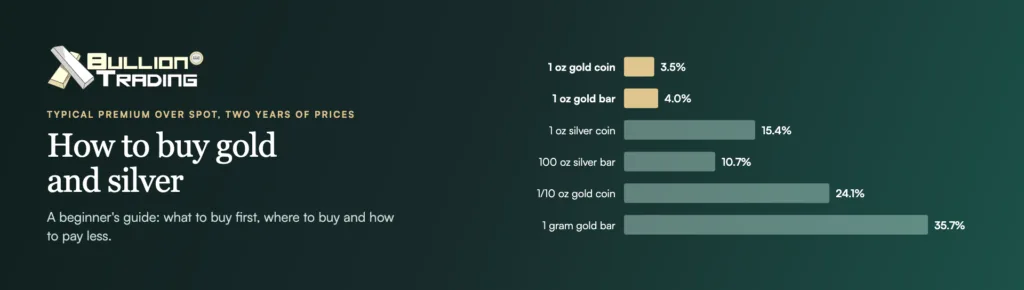
To buy physical gold or silver, choose a widely traded coin or bar, compare its price with the spot price, buy from a dealer you can verify, and pay by wire or check where that costs less. Size matters more than brand. In Bullion Trading LLC's price records since 27 October 2024, a 1 oz gold coin cost a median 2.7% more than the value of its gold at the Ask, a 1/10 oz coin 23.6% and a 1 gram bar 34.4%, while a 1 oz silver coin cost 14.7% more than its silver.
Demand is strong: investors bought 1,374 tonnes of gold bars and coins in 2025, a 12-year high, the World Gold Council reported. On 3 November 2026 the gold Ask was $3,965 an ounce and silver $49.77, 27% and 58% below the records both set on 29 January 2026. Spot is the price of one troy ounce (31.1035 grams, about 10% more than a kitchen-scale ounce, per NIST); the premium is what a piece costs above its metal value. The premiums below are one New York dealer’s prices, measured over two years rather than on one day.
| Key finding | Result |
|---|---|
| Premium over the Ask, 1 oz gold coin vs 1 oz gold bar | 2.7% vs 3.2% (medians); 2.1% vs 3.3% on the latest day |
| Smallest gold pieces | 1/10 oz coin 23.6%; 1 gram bar 34.4% |
| Silver | 1 oz coin 14.7%; 100 oz bar 9.7% |
| Paying by card or PayPal | 5% more than check or wire at Bullion Trading LLC |
| Sales tax on investment bullion | Exempt in 30 states; conditional in 10; taxable in 5 and DC; no state sales tax in 5 |
| Federal tax on a gain | Taxed as a collectible: long-term gains up to 28% |
| Gold and silver now | Gold 27%, silver 58% below their records |
What should a beginner buy first: gold coins or gold bars?
A widely traded 1 oz coin or bar is the cheapest way in per ounce, and coins are not always the dearer choice. At 1 oz, government coins have not cost more than bars: a median 2.7% against 3.2% for 1 oz bars, and 2.1% against 3.3% on the latest day. Above 1 oz the saving is small: 10 oz bars 3.2% and kilo bars 1.9%.
The reason is a cost in dollars per piece. Minting, packaging and handling cost nearly as much for a small coin as for a large one, so that cost does not shrink with the gold. Today the lowest-priced 1/10 oz gold coin costs 13.9% over the Ask, against 1.7% for the lowest-priced 1 oz coin, about eight times as much per ounce of gold. Fractional coins and gram bars suit gifts and small budgets; for saving, they cost more per ounce.
Myth: bars are always cheaper than coins. Fact: at 1 oz the gap is small and goes both ways. In the price records Krugerrands and Philharmonics cost less over spot than most branded bars; size and the payment method moved the price far more.
Stick to pieces any dealer recognizes at a glance: government coins such as the American Eagle, Canadian Maple Leaf, South African Krugerrand and Austrian Philharmonic, and bars from refiners on the LBMA Good Delivery list, kept in their sealed assay card, which helps them resell for more. Purity alone does not set value: the 22-karat American Eagle contains a full troy ounce of gold, as federal law specifies.
Widely traded first purchases
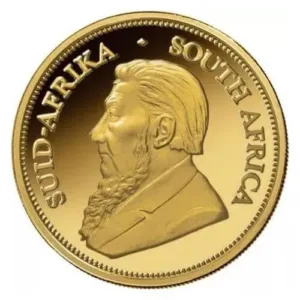
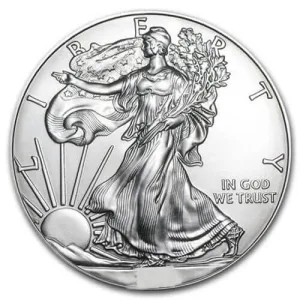
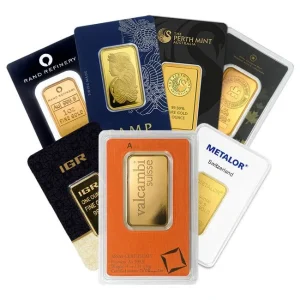
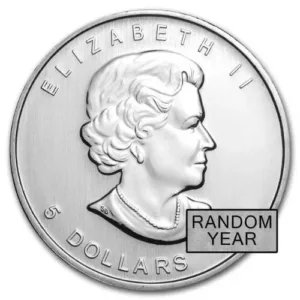
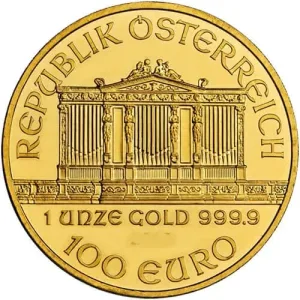
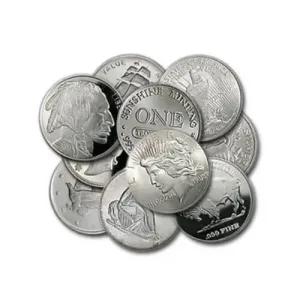
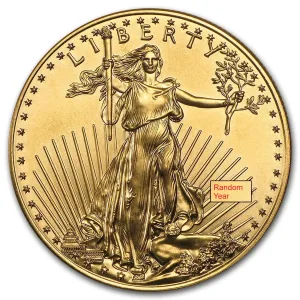

The large price is the check/wire price; the card/PayPal price is listed under it. Prices follow the live spot price.
Should you buy gold or silver first?
Gold stores more value in less space; silver lets you buy in small amounts but swings harder and costs more over its metal. At 3 November 2026 prices, $10,000 buys about 2.5 oz of gold in 1 oz coins, a short stack that fits in a hand, or about 175 oz of silver in 1 oz coins, which weigh 11.9 lb. Silver also costs more over its metal: a median 14.7% for 1 oz silver coins against 2.7% for 1 oz gold coins, and 9.7% even for 100 oz silver bars.
Where is the best place to buy physical gold and silver?
An established bullion dealer, online or in person, that publishes its prices and buys back what it sells. Other places work, with trade-offs.
| Where | What to expect | Watch for |
|---|---|---|
| Bullion dealer, online or a store | Wide choice, prices tied to spot, a buy-back desk | Address, license, reviews and written terms |
| U.S. Mint | Collector coins sold directly; bullion coins only through authorized purchasers | Collector versions cost far more than bullion |
| Warehouse club | Costco has sold 1 oz gold bars to members online since 2023 (CNBC) | Members only; per-member limits |
| Marketplaces and social media | Many sellers, some “below spot” | Counterfeits and fake sellers |
| TV and phone sellers | Convenience | Pressure tactics and collector markups |
How do you check a dealer before you pay?
Look for facts you can confirm outside the dealer’s website: a street address, a license you can look up, a Better Business Bureau profile, written prices for each payment method, published return terms and a buy-back desk. Walk away from pressure, prices below spot and requests for gift cards, crypto or a wire to a personal account. The CFTC and FINRA add two red flags: fees not given in writing before you buy, and unsolicited calls with attractive offers. See the guide to gold scams, and how ordering works at Bullion Trading LLC for each check applied to one store.
Is it cheaper to pay by wire, check or card?
Usually wire or check, because card networks and PayPal charge the seller a fee on every sale. At Bullion Trading LLC the card and PayPal price is 5% above the check/wire price, so a $5,000 order costs $250 more; card and PayPal orders go up to $7,500, and wire and check orders start at $1,000. Rewards rarely cover the gap; the credit card guide runs the numbers.
Do you pay sales tax on gold and silver?
In most states, not on investment bullion, but it depends on where the order is delivered. Investment bullion is exempt in 30 states and exempt above a dollar threshold or only for some metals in 10; 5 tax it (Hawaii, Maine, New Mexico, Vermont and Washington), as does the District of Columbia, and 5 have no state sales tax. The thresholds are $1,000 in Connecticut, Maryland, Massachusetts and New York and $2,000 in California.
Physical gold, a gold ETF or mining stocks?
Coins and bars are the only way to hold the metal yourself; the other ways to invest in gold trade like securities.
| Option | What you own | Costs and risks |
|---|---|---|
| Coins and bars | The metal, with no one in between | Premium to buy, storage, a spread when you sell |
| Gold ETFs | Shares of a trust that holds bullion | Yearly fee: 0.40% for SPDR Gold Shares, 0.25% for iShares Gold Trust |
| Futures | Exchange contracts, 100 oz each on COMEX | Leverage; contracts expire |
| Mining and royalty stocks | Companies | Company and country risk |
| Jewelry | Gold plus design and labor | Labor is rarely paid back on resale |
How much should a beginner buy, and when?
Only an amount you could hold through a long fall, bought in steps rather than all at once. Gold reached an LBMA price of $850 on 21 January 1980 and did not close above it again until 3 January 2008; after its $1,895 high of 5 September 2011 it took until July 2020. Today gold is 27% below its January 2026 record. The guides to how much gold and silver to own and buying in steps go further.
Where do you keep it, and how is it taxed?
Decide before it arrives. A home safe keeps it at hand (check your insurance), a bank safe-deposit box costs little but its contents are not FDIC-insured, and a private depository insures it for a fee; see storing precious metals. Keep every invoice: the IRS taxes gains on bullion as collectibles, at up to 28% for long-term gains (Topic 409), and the invoice proves your cost. When you sell, recognized pieces in original packaging fetch the best prices. We buy back what we sell in gold, silver, platinum and palladium: bars, rounds and coins, including world gold bullion coins, pre-1933 U.S. gold coins ($20, $10 and $5), British Sovereigns, 90% silver coins, Morgan and Peace dollars and the collector coins we carry (today’s buy prices). We don’t buy sterling silver, jewelry or scrap, or casting grain as standard (for larger lots of grain, contact us: we can melt it into one homogeneous bar, assay it, and pay based on the assay), and the minimum sale is $1,000.
A beginner’s checklist
- I know why I am buying and the most I will put into metal.
- I picked one or two widely traded products, not a collection.
- I compared the premium over spot, not just the price.
- I know the price for my payment method, plus shipping and sales tax.
- The dealer has an address, a license and a buy-back desk I can verify.
- I know where the metal will be stored and whether it is insured.
- I will keep the invoice and the assay card or original packaging.
- I will buy in steps instead of trying to time the bottom.
How we did the research
We took the check/wire prices Bullion Trading LLC recorded for 77 products in 13 types, 27 October 2024 to 3 November 2026, about four times a day, and used each day’s median, divided by the value of the product’s fine metal at that day’s spot close (the LBMA price; after 28 September 2026, the 5 pm New York close). Each type’s figure is the median across its standard products each day, then the median of those days; “latest” is the last recorded day. Limits: one dealer’s prices; shorter records for products listed later; collectible, numismatic and secondary-market pieces left out. Monthly medians: CSV download.
The bottom line
For a first purchase, a 1 oz gold coin or bar has cost about 2.7% over its gold in our records, against 34.4% for a 1 gram bar and 14.7% for a 1 oz silver coin. Pick products you can easily resell, check the dealer, pay the cheapest way you can, and plan storage before the metal arrives.
Frequently asked questions
Is it better to buy gold coins or gold bars?
Not always. In our records a 1 oz government coin has cost a median 2.7% over the Ask against 3.2% for a 1 oz bar, and coins are the easiest pieces to resell.How do I start buying gold and silver?
Set a budget, pick a widely traded 1 oz coin or bar, compare its price over spot for your payment method, and buy from a dealer you can verify.
What is the safest way to buy gold and silver?
From an established dealer, paid by a traceable method, and either shipped insured with a signature or collected in person.
Sources
- World Gold Council, Gold Demand Trends: Full Year 2025: bar and coin demand.
- LBMA, Precious metal prices: daily prices and records.
- NIST, Handbook 44, Appendix C: the troy ounce.
- CFTC and FINRA, 10 Things to Ask Before Buying Physical Gold, Silver, or Other Metals: red flags.
- IRS, Topic 409 and Schedule D instructions: bullion as a collectible.
- FDIC, Understanding deposit insurance: safe-deposit boxes.
- Virginia General Assembly, 2026 budget act (HB 30), item 3-5.22: bullion exemption to 2028.
- Bullion Trading LLC price records and store settings; the state-law review behind the bullion sales tax by state pages.