
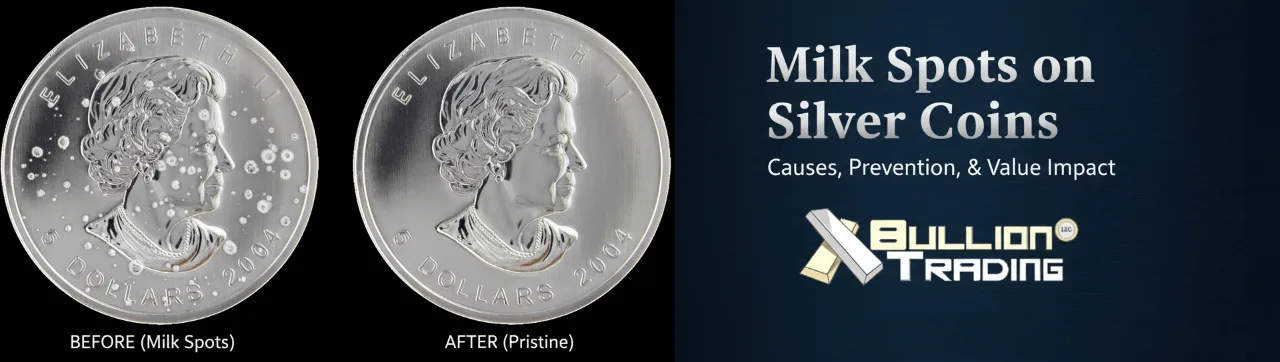

If you’ve ever pulled a silver coin from storage only to discover cloudy white patches marring its surface, you’ve encountered one of the bullion world’s most frustrating mysteries: milk spots. These seemingly random blemishes have plagued silver coin collectors and investors for decades, appearing on coins from virtually every major mint worldwide. Understanding what causes these spots, how to minimize their occurrence, and whether they actually affect your investment’s value can help you make smarter decisions about your precious metals portfolio.
What Are Milk Spots on Silver Coins?
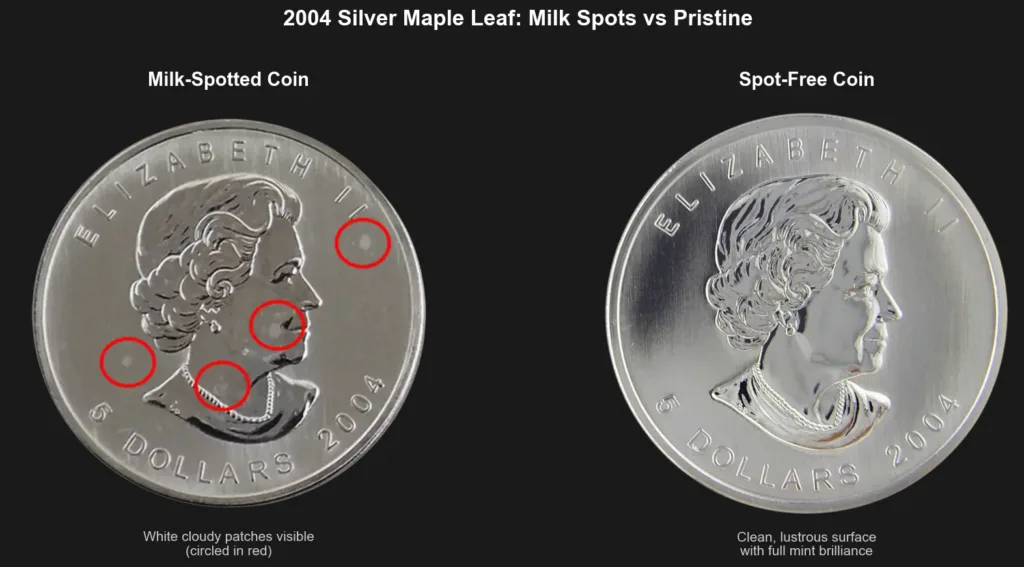
Milk spots are hazy white or cloudy patches that appear on the surface of silver bullion coins, often developing months or even years after the coins were minted. The name comes from their appearance, which resembles dried milk stains or cloudy residue on the otherwise lustrous silver surface. Unlike toning, which involves the gradual oxidation of silver that can sometimes enhance a coin’s appearance, milk spots are generally considered a defect that detracts from the coin’s visual appeal.
These blemishes range from tiny specks barely visible to the naked eye to large patches covering significant portions of a coin’s surface. They can appear on any part of the coin, including the fields, devices, and even across the portrait or design elements. What makes milk spots particularly frustrating for collectors is their unpredictable nature. Two coins from the same mint tube, stored identically, might behave completely differently. One remains pristine while the other develops extensive spotting.
The Science Behind Milk Spots
Despite years of research by mints and metallurgists worldwide, the exact cause of milk spots remains somewhat debated within the numismatic community. However, the scientific consensus points to residues left over from the minting process as the primary culprit. According to research conducted by the Royal Canadian Mint and other major minting facilities, these residues interact with the silver over time, causing the characteristic white discoloration.
During the coin striking process, silver blanks undergo multiple steps including annealing (heating and cooling to soften the metal), cleaning with various chemical solutions, and finally striking under tremendous pressure. Each step can potentially leave microscopic residues on the coin’s surface. These residues, which are invisible at the time of minting, contain organic compounds and salts that react with the silver over time, especially when exposed to moisture, temperature fluctuations, or certain storage materials.
The most commonly identified culprits include detergent residues from the cleaning process, lubricants used during striking, and even compounds from the protective capsules or flips used for storage. When these substances interact with atmospheric moisture and the silver surface, they create silver chloride or other compounds that appear as the white or cloudy spots we recognize as milk spots.
Which Coins Are Most Affected?
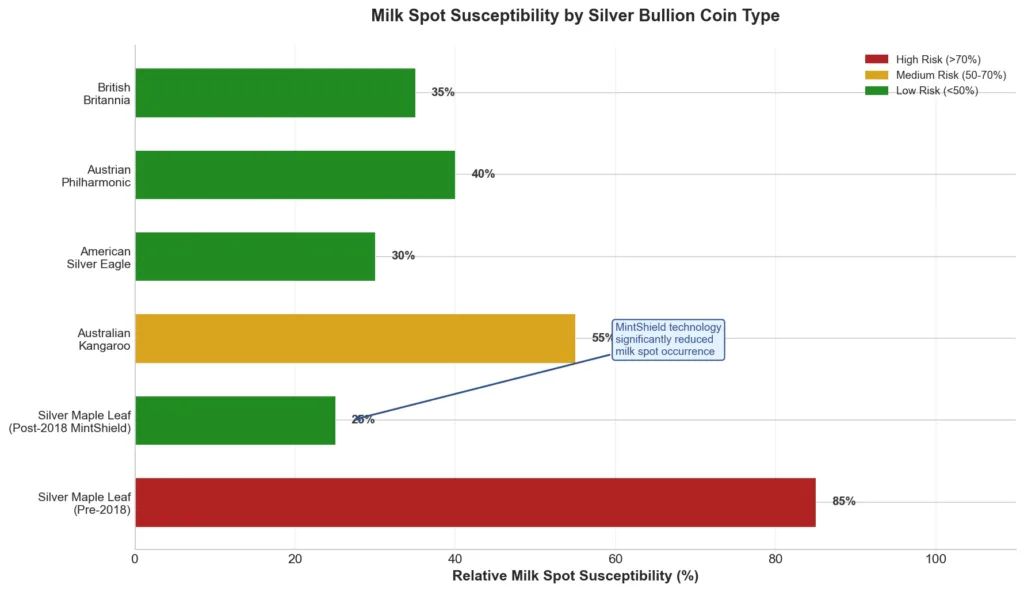
While milk spots can theoretically appear on any silver bullion coin, certain products have historically been more susceptible than others. The Canadian Silver Maple Leaf has unfortunately earned a reputation for milk spot issues, particularly coins minted before 2018. This was a persistent enough problem that the Royal Canadian Mint took significant steps to address it, developing proprietary technology specifically to combat the issue.
Australian Silver Kangaroos from the Perth Mint have also experienced milk spotting, though generally to a lesser degree than their Canadian counterparts. American Silver Eagles from the United States Mint, Austrian Silver Philharmonics, and British Silver Britannias have all had reported cases, though these tend to be less frequent and severe.
Interestingly, the .999 fine silver standard used by most major bullion coins appears more susceptible to milk spotting than coins with slightly lower purity or different alloy compositions. Some numismatists theorize that the pure silver surface is more reactive to the residual compounds that cause spotting, though this remains an area of ongoing research.
The Royal Canadian Mint’s MintShield Solution
In January 2018, the Royal Canadian Mint announced a significant breakthrough in addressing the milk spot problem. They introduced MintShield technology, a proprietary surface protection that was integrated into their Silver Maple Leaf production process. According to the Mint’s announcement, this technology was developed after years of extensive research and testing to inhibit the appearance of white spots on their flagship silver bullion coin.
The MintShield process involves modifications to the coin production workflow that reduce or eliminate the residues responsible for milk spots. While the exact details remain proprietary, the technology reportedly addresses the root causes during the minting process rather than applying a coating or treatment after striking. The Mint was careful to emphasize that MintShield does not alter the coin’s composition or weight, maintaining the 99.99% pure silver standard that collectors expect.
Since the introduction of MintShield, reports of milk spotting on Silver Maple Leafs have decreased significantly, though no technology can claim to be 100% effective. Collectors and dealers have generally reported positive experiences with post-2018 coins, making the mintage year an important consideration when purchasing Canadian silver bullion.
How Milk Spots Impact Coin Value
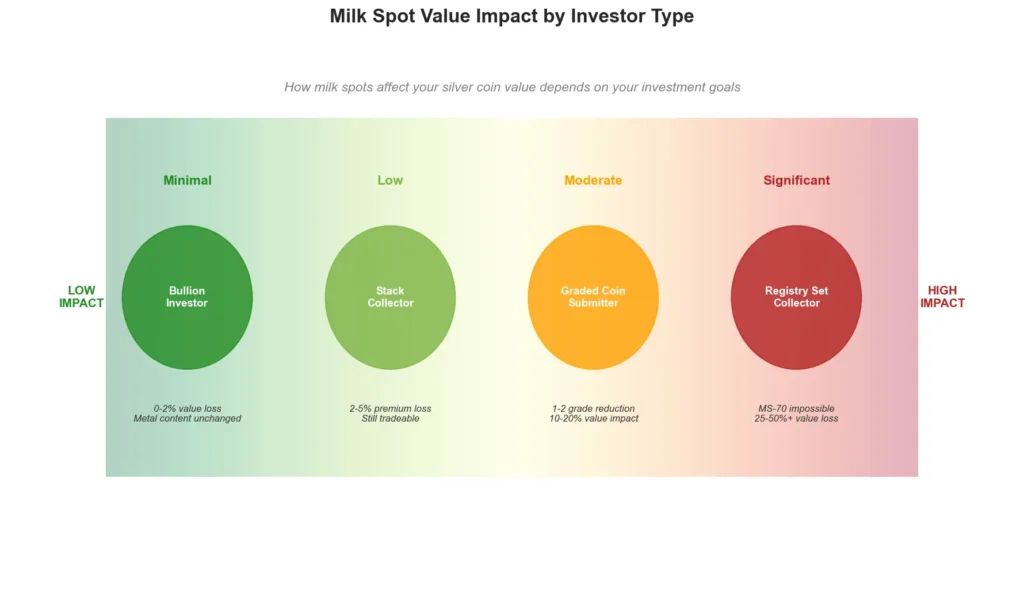
For investors holding silver primarily for its metal content, milk spots present a nuanced situation. The silver content of a milk-spotted coin remains identical to a pristine example. One troy ounce of .999 fine silver is one troy ounce of .999 fine silver, regardless of surface appearance. Most reputable bullion dealers, including Bullion Trading LLC, will purchase milk-spotted coins at or very near spot price, recognizing that the metal value is unaffected.
However, when it comes to reselling to collectors or through retail channels, milk-spotted coins typically command lower premiums than their pristine counterparts. A perfect, spot-free Silver Maple Leaf might sell for $2 to $4 above spot, while a heavily spotted example from the same year might only fetch spot price or slightly above. For numismatic coins, graded pieces, or limited edition releases, the impact can be more severe, with milk spots potentially reducing grades and values by significant percentages.
The grading services NGC and PCGS both consider milk spots as surface defects that can affect a coin’s grade. A coin that might otherwise grade MS-70 (perfect uncirculated) could be downgraded to MS-68 or lower if milk spots are present. For collectors pursuing registry sets or perfect specimens, this distinction matters significantly.
Prevention and Proper Storage
While you cannot entirely eliminate the risk of milk spots developing on coins already in your possession, proper storage practices can minimize the likelihood and severity of their appearance. The key factors to control are moisture, temperature stability, and contact with reactive materials.
Storing silver coins in a cool, dry environment with stable temperatures helps reduce the chemical reactions that cause spotting. Sudden temperature changes can cause condensation on coin surfaces, accelerating the reaction between residues and silver. A climate-controlled environment or, at minimum, a location that avoids extreme temperature swings is ideal.
The choice of storage materials matters significantly. High-quality coin capsules made from inert materials like acrylic offer excellent protection. However, some cheaper plastic holders, particularly those containing PVC (polyvinyl chloride), can actually cause damage to silver coins over time, creating greenish residue known as “PVC damage.” Always verify that storage products are specifically designed for precious metals and are PVC-free.
For tubes of bullion coins, consider transferring them to individual capsules if long-term preservation is a priority. While mint tubes are convenient and often collector-preferred for their original packaging, they allow coins to contact each other and may trap moisture between pieces. Silica gel packets placed in storage containers can help absorb excess moisture, though they should be replaced periodically.
Can You Remove Milk Spots?
The question of whether to clean milk-spotted coins is controversial in the numismatic community. The overwhelming consensus among collectors and dealers is that cleaning coins is generally inadvisable. Cleaning almost always damages a coin’s surface to some degree, removing the original mint luster and potentially creating hairlines or other damage visible under magnification.
That said, for bullion coins held purely for their metal value, some owners have experimented with various cleaning methods. Soaking in distilled water, gentle washing with pure soap, and various commercial coin dips have all been tried with mixed results. Some collectors report success in reducing the appearance of milk spots, while others have made the spotting worse or damaged their coins in the process.
If you’re considering attempting to clean milk spots, understand that you may reduce or eliminate any numismatic premium the coin might otherwise carry. Professional numismatic conservation services exist, but their costs typically exceed the value improvement for standard bullion issues. For valuable numismatic pieces, consulting with a professional before attempting any cleaning is strongly advised.
Buying Strategies to Avoid Milk Spots
While you cannot guarantee a coin will never develop milk spots, several purchasing strategies can reduce your risk. First, consider the mint and year of issue. Post-2018 Silver Maple Leafs with MintShield technology have shown significantly fewer issues than earlier years. Some investors specifically avoid certain date ranges known for higher spotting rates.
Purchasing from reputable dealers who properly store their inventory reduces the risk of receiving coins that have already been exposed to problematic conditions. Established dealers like Bullion Trading LLC maintain climate-controlled storage and handle products with appropriate care, minimizing exposure to conditions that accelerate spotting.
For those particularly concerned about milk spots, American Silver Eagles have historically shown lower spotting rates than some competitors. British Silver Britannias from the Royal Mint have also earned a reputation for quality surface preservation. Diversifying across multiple mint products can help spread any potential spotting risk across your portfolio.
The Bottom Line for Investors
Milk spots represent an aesthetic issue more than a financial one for most bullion investors. If your primary goal is accumulating silver for its intrinsic metal value, milk spots should not significantly impact your investment strategy. The silver content is identical, and the vast majority of dealers will purchase milk-spotted coins at competitive prices.
However, if you’re building a collection with numismatic aspirations, pursuing perfect grades, or planning to sell individual coins at retail premiums, milk spot prevention and avoidance become more relevant considerations. Understanding which products and mintages carry higher risks, implementing proper storage practices, and purchasing from reputable sources all help protect the premium value of your silver holdings.
The good news is that the industry is aware of the problem and actively working to address it. The Royal Canadian Mint’s MintShield technology represents meaningful progress, and other mints continue researching improvements to their production processes. For now, the best approach combines informed purchasing decisions with careful storage practices to give your silver the best chance of maintaining its pristine appearance for years to come.
Whether you’re expanding an existing precious metals portfolio or just starting your silver investment journey, Bullion Trading LLC offers a comprehensive selection of silver bullion products from the world’s most respected mints. Our experienced team can help you select products that meet your investment goals while providing guidance on proper storage and care for your precious metals holdings.
