


When shopping for gold bars, you will quickly encounter two distinct types: cast gold bars and minted bars. While both contain the same precious metal at the same purity level, the manufacturing process, appearance, and cost differ significantly. Understanding these differences can help you make smarter purchasing decisions and potentially save money depending on your investment goals.
The precious metals market offers investors numerous ways to own physical gold, and bars remain among the most efficient options. Whether you are a first-time buyer or an experienced collector expanding your portfolio, knowing what sets cast bars apart from minted bars is essential knowledge for navigating today’s bullion market.
How Cast Gold Bars Are Made
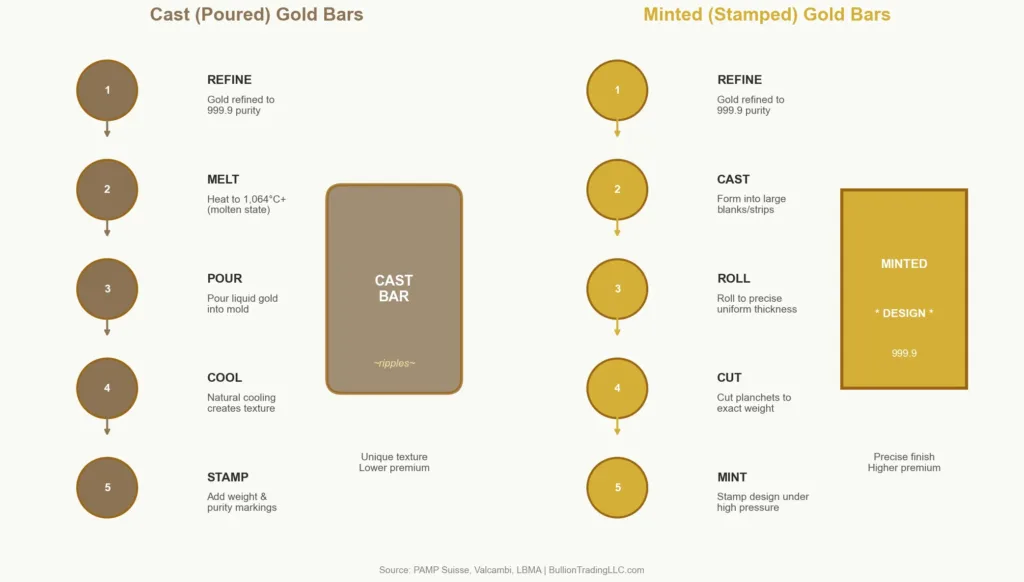
Cast gold bars, sometimes called poured bars, represent the oldest and most traditional method of creating gold bullion. The process is straightforward: refined gold is heated until it becomes molten liquid, typically at temperatures exceeding 1,064 degrees Celsius (gold’s melting point). This liquid gold is then poured directly into a mold that determines the bar’s final shape and size.
Once the metal cools and solidifies, the bar is removed from the mold. Because the cooling process happens naturally, cast bars develop unique characteristics. You will notice slightly irregular edges, a somewhat rough surface texture, and occasional ripple marks where the molten metal settled. Each cast bar essentially becomes one of a kind, with subtle variations that distinguish it from others produced in the same batch.
Major refineries including PAMP Suisse, Valcambi, and The Royal Mint produce cast bars in larger sizes, typically ranging from 50 grams to 1 kilogram for retail investors. The wholesale market also trades massive 400-troy-ounce (approximately 12.4 kilogram) cast bars that meet London Bullion Market Association (LBMA) Good Delivery standards. These large bars form the backbone of the global gold trading system and are what central banks and institutional investors typically hold.
The Minted Bar Manufacturing Process
Minted bars involve considerably more labor and precision. The process begins similarly to cast bars, with gold being melted and formed into large blanks. However, instead of simply pouring metal into a mold and letting it cool, refiners cut or roll the gold into long strips of uniform thickness.
These strips are then cut into individual pieces called planchets, which match the exact weight specification of the final bar. The planchets undergo multiple quality checks before being fed into stamping presses that apply tremendous pressure to imprint detailed designs onto both surfaces. This minting process is essentially the same technique used to produce coins, hence the name.
The result is a bar with sharp, precise edges, mirror-like or frosted finishes, and intricate designs that can include the refiner’s logo, weight specifications, purity markings, serial numbers, and often artistic imagery. PAMP Suisse’s Lady Fortuna design, introduced in 1979, became the first artistic design ever applied to a precious metals bar and remains one of the most recognized in the industry.
Visual and Physical Differences
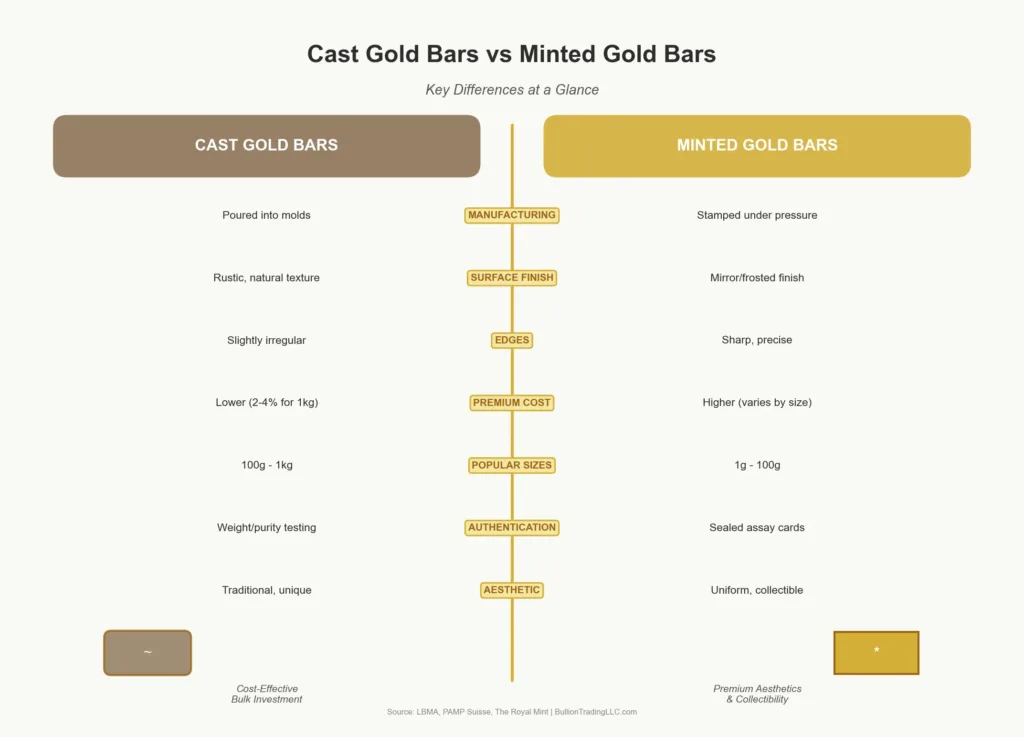
The most obvious difference between cast and minted gold bars is their appearance. Cast bars have an organic, handcrafted look that many collectors find appealing. The surface may show cooling lines, slight dimpling, or minor variations in thickness toward the edges. Some investors prefer this rustic aesthetic because it connects them to gold’s ancient history as a store of value.
Minted bars offer the opposite aesthetic: precision and uniformity. Every edge is sharp and square. Surfaces are either highly polished to a mirror finish or given a matte frosted texture through sandblasting. Serial numbers are stamped clearly, and designs appear in crisp relief. These bars often come sealed in protective assay cards that serve as certificates of authenticity, allowing investors to verify the bar’s specifications without handling the gold directly.
Weight accuracy is essentially identical between the two types when purchased from reputable refiners. Both cast and minted bars from LBMA-accredited refineries must meet strict tolerance standards. The manufacturing method does not affect the gold content; a one-ounce bar contains one troy ounce of gold regardless of how it was produced.
Premium Differences and Cost Considerations
Here is where the distinction becomes financially significant. Minted bars consistently carry higher premiums over the spot price of gold compared to cast bars of the same weight and purity. This premium difference directly reflects the additional manufacturing costs involved.
Producing minted bars requires specialized equipment, precision tooling, multiple processing steps, and more labor hours per ounce. The stamping dies used to create designs must be engineered and periodically replaced. Quality control is more intensive because surface imperfections that would be acceptable on a cast bar become unacceptable blemishes on a minted product.
The Royal Mint notes that cast gold bullion bars are “considered as a cost-effective solution for investors” due to their “often-lower manufacturer’s premium.” This makes cast bars attractive for investors focused primarily on accumulating gold by weight rather than collecting visually appealing products.
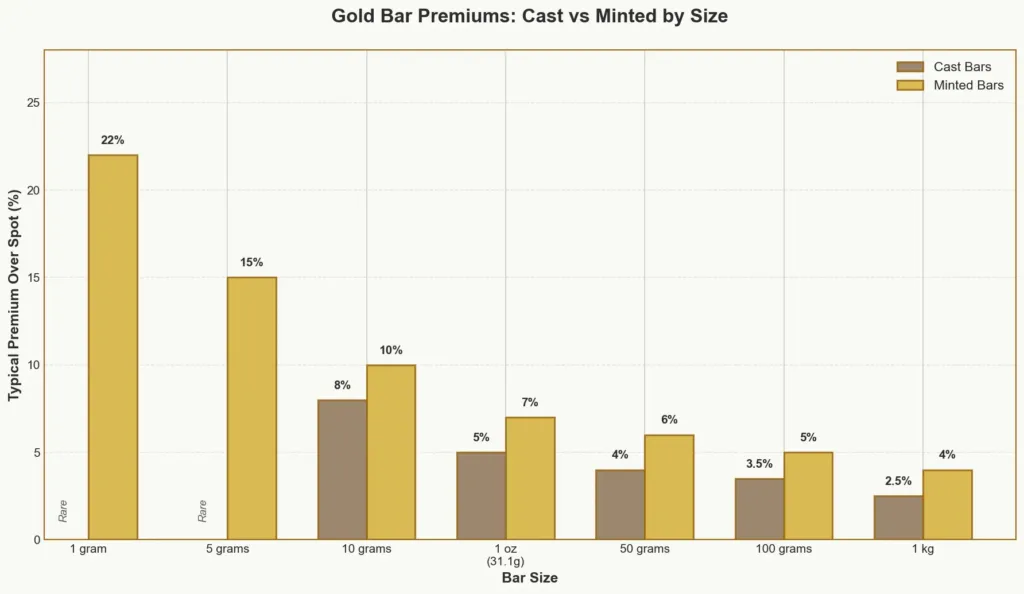
The premium gap varies depending on bar size, refiner reputation, and market conditions. As a general rule, smaller bars carry proportionally higher premiums regardless of type because the fixed costs of production, packaging, and handling are spread across less gold. A one-gram minted bar might carry a premium of 15 to 25 percent over spot, while a one-kilogram cast bar from the same refiner could trade at just 2 to 4 percent over spot.
Liquidity and Resale Considerations
Both cast and minted bars from recognized refiners enjoy strong liquidity in the global precious metals market. The key factor affecting resale is not the manufacturing method but the refiner’s reputation and whether the bar meets industry standards.
Bars produced by refineries on the LBMA Good Delivery List command the highest confidence among dealers and investors worldwide. This list currently includes 66 gold refiners from around the world, including industry leaders like MKS PAMP SA, Valcambi SA, Argor-Heraeus, Metalor Technologies, The Perth Mint, and the Royal Canadian Mint. According to PAMP’s quality documentation, MKS PAMP is one of only three refineries worldwide designated as “Referee” by both the LBMA and the London Platinum and Palladium Market, reflecting their role in maintaining industry standards.
Minted bars in their original sealed packaging may command slight premiums at resale because the packaging serves as authentication. Cast bars typically require verification through weight and purity testing, which reputable dealers perform routinely. Neither type presents particular challenges when selling to established bullion dealers or through major trading platforms.
Which Type Should You Choose?
Your choice between cast and minted gold bars ultimately depends on your investment priorities. Consider cast bars if you want to maximize gold content relative to your spending. The lower premiums mean more of your money goes toward actual gold rather than manufacturing costs. Cast bars make particular sense for larger purchases where premium savings can add up significantly.
Minted bars may appeal more if aesthetics matter to you, if you plan to gift the gold, or if you prefer products with integrated authentication packaging. Some investors appreciate collecting different designs from various mints, treating their gold holdings as both investments and collectibles.
For IRA-eligible gold investments, both cast and minted bars can qualify as long as they meet IRS fineness requirements (minimum 99.5% purity) and are produced by refiners meeting specific accreditation standards. Most bars from LBMA-listed refiners satisfy these requirements.
Market Availability and Size Options
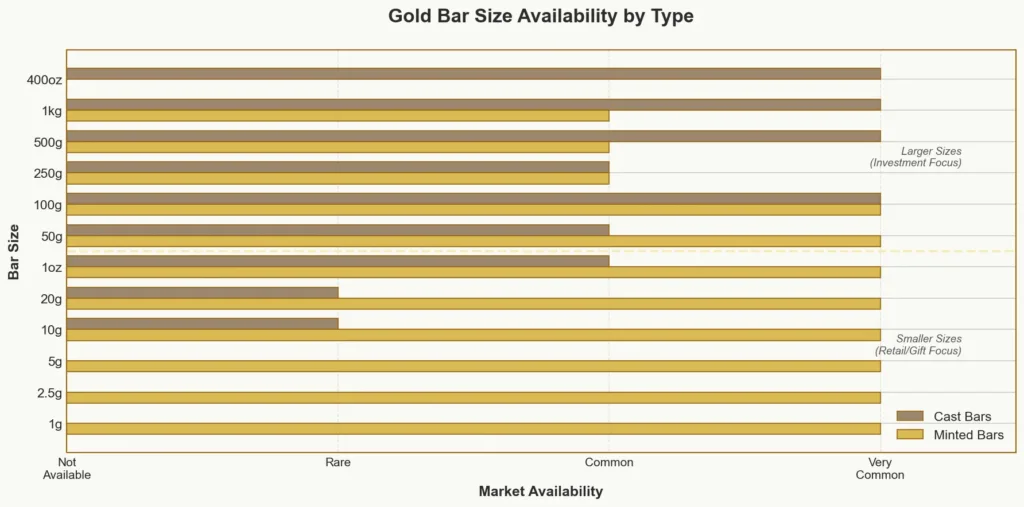
Minted bars are more commonly available in smaller sizes ranging from one gram to 100 grams, making them accessible for investors with modest budgets or those who prefer frequent small purchases. The detailed designs and secure packaging make them popular gift items, particularly in Asian markets where gold gifting carries cultural significance.
Cast bars dominate the market for larger sizes. While you can find minted bars up to one kilogram, cast bars are more prevalent at the 500-gram and one-kilogram level. The massive 400-ounce bars used in wholesale trading and central bank reserves are exclusively cast because minting at that scale would be impractical and add unnecessary costs to bars traded purely on their gold content.
At Bullion Trading LLC, we offer comprehensive options across both product types, allowing investors to choose based on their specific needs and preferences. Our inventory includes cast and minted bars from leading refineries in sizes suitable for every budget and investment strategy.
Making Your Decision
Understanding the difference between cast gold bars and minted bars empowers you to make informed purchasing decisions. Cast bars offer cost efficiency and traditional appeal. Minted bars deliver precision, design variety, and integrated authentication. Both represent sound ways to own physical gold from reputable sources.
The gold itself does not know or care how it was formed into a bar. What matters is the purity, weight accuracy, and refiner credibility. Whether you choose the rustic character of a cast bar or the polished perfection of a minted product, you are acquiring a tangible asset with a track record spanning thousands of years of human history.
Consider starting with whichever type aligns with your budget and preferences, then diversifying your holdings over time to include both. Many experienced precious metals investors maintain a mix, using cast bars for bulk accumulation and minted products for their collectibility and gifting potential.
