


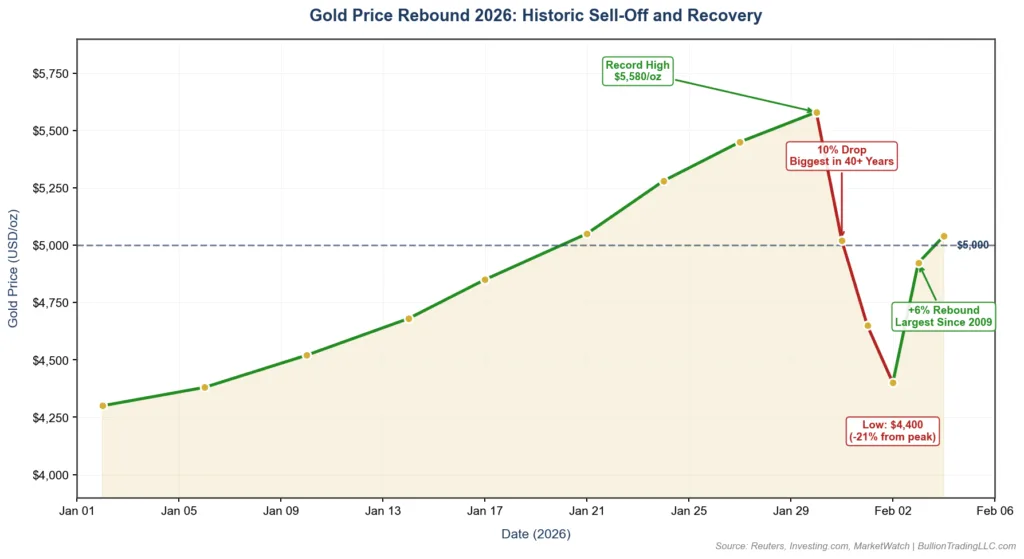
The gold price rebound 2026 has captured global attention as the precious metal staged a remarkable comeback after experiencing one of the most dramatic sell-offs in more than four decades. After plunging nearly $1,200 from record highs last week, bullion has recovered strongly, climbing back above the psychologically important $5,000 per ounce threshold. The yellow metal posted its largest single-day percentage gain since 2009 on Tuesday, demonstrating that despite the recent turbulence, appetite for gold remains robust among investors seeking safety and diversification.
The recent price action has been nothing short of extraordinary. Gold plunged approximately 10% on Friday alone, marking its biggest daily decline in more than 40 years. Combined with earlier weakness, the yellow metal shed nearly $1,200 per ounce in just two sessions, falling as low as $4,400 before finding a floor. One-week realized volatility spiked above 90%, an unusual figure for an asset traditionally prized for its stability.
What Triggered the Sell-Off?
The catalyst for the sharp correction came from Washington. President Donald Trump’s nomination of former Federal Reserve governor Kevin Warsh as the next chairman of the central bank sent shockwaves through precious metals markets. Warsh, known for his relatively hawkish stance on monetary policy compared to other Fed officials, represents a departure from what markets had anticipated. The nomination cleared a significant point of uncertainty for investors, which paradoxically reduced some of the safe-haven demand that had propelled gold to unprecedented heights.
The dollar strengthened considerably on the news, putting additional downward pressure on gold prices. A stronger dollar typically makes gold more expensive for buyers holding other currencies, dampening demand. The move also triggered a wave of profit-taking after bullion had surged approximately 30% in the first four weeks of 2026 alone, reaching nearly $5,600 per ounce. According to Reuters analysis, this level of speculative excess made a correction almost inevitable.
Peter Berezin, chief global strategist at BCA Research, noted in a recent report that gold had moved “too far, too fast”. While acknowledging that concerns over currency debasement remain legitimate, he cautioned that the pace of the rally had created conditions ripe for a pullback.
Buy the Dip: How the Recovery Takes Hold
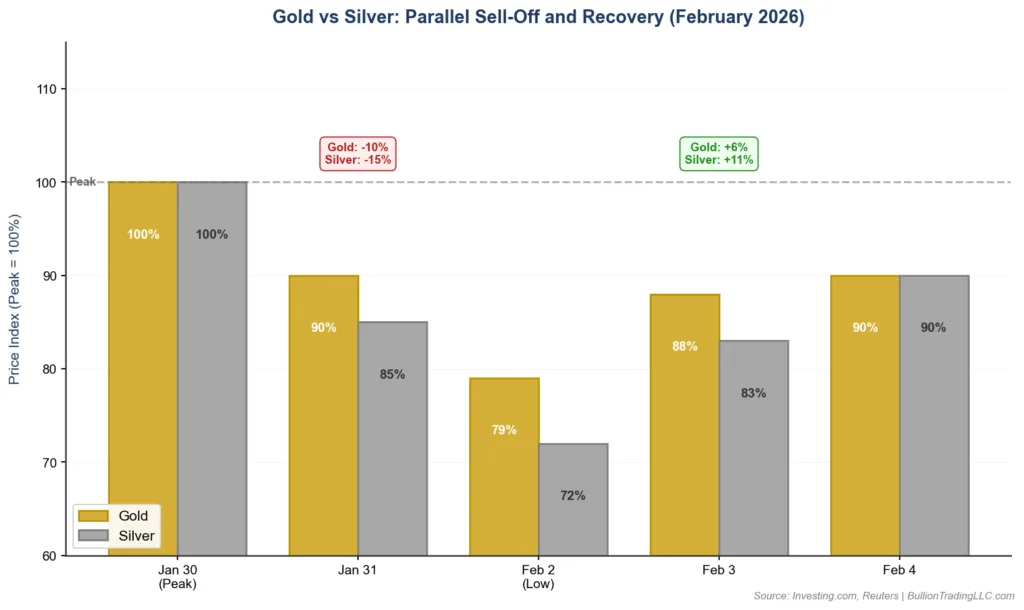
Despite the dramatic nature of the sell-off, the recovery has been equally impressive. On Tuesday, spot gold surged approximately 6% to close near $4,923 per ounce, while gold futures rose even more sharply. By Wednesday, prices had climbed back above $5,000, with spot gold trading around $5,040 as renewed geopolitical tensions supported safe-haven demand.
The rebound reflects what analysts describe as classic buy the dip behavior, with investors seizing the opportunity to purchase gold at lower prices. Physical demand from retail investors has remained particularly strong in recent months, providing a supportive backdrop even as leveraged institutional traders scrambled to exit positions. As analysts at ANZ noted, “Further stabilization will be determined by the mentality of the retail market. Physical demand from this sector has been strong in recent months and could provide a strong backdrop to the selling from leveraged trades in the institutional market”.
Silver has participated vigorously in the recovery, with spot prices jumping approximately 11% to near $88 per ounce on Tuesday and continuing higher Wednesday. The white metal’s dual role as both a precious metal and industrial commodity has attracted strong interest, particularly given ongoing demand from the renewable energy sector.
Geopolitical Tensions Reignite Safe-Haven Demand
Just as some investors were questioning gold’s traditional role as a portfolio stabilizer, rising tensions between the United States and Iran reminded markets why safe haven demand for the yellow metal commands a premium during uncertain times. Reports emerged that U.S. forces shot down an Iranian drone in the Arabian Sea, while separately, Iranian gunboats approached a U.S.-linked tanker in the Strait of Hormuz.
These developments somewhat undermined earlier optimism following announcements that Tehran and Washington would hold nuclear talks on Friday. Oil prices also moved higher on these concerns, with Brent crude climbing toward $68 per barrel and WTI approaching $64 per barrel. The interconnected nature of commodity markets means that geopolitical risk affecting energy often spills over into precious metals as investors seek safety across asset classes.
Central Bank Buying Remains a Pillar of Support
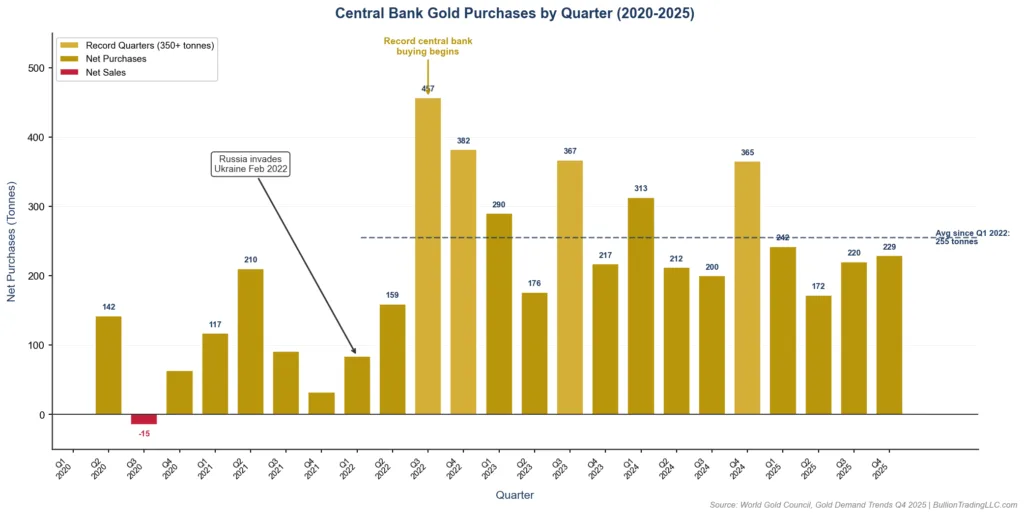
One of the most important structural factors supporting gold prices has been persistent central bank gold buying worldwide. According to the World Gold Council’s latest Gold Demand Trends report, central bank purchases reached 863 tonnes in 2025, remaining at historically elevated levels despite moderating slightly from the record pace seen in previous years.
This official sector accumulation began in earnest following Russia’s invasion of Ukraine in 2022 and has continued as reserve managers diversify away from dollar-denominated assets. As Reuters noted, gold has now leapfrogged the euro to become the second-largest asset in central bank reserves globally, trailing only the U.S. dollar itself.
The World Gold Council data reveals that total gold demand in 2025 exceeded 5,000 tonnes for the first time ever, representing an unprecedented value of $555 billion. Global gold ETF holdings grew by 801 tonnes during the year, marking the second strongest year on record, while bar and coin buying accelerated to reach a 12-year high of 1,374 tonnes.
What Strategists Are Saying
Despite recent volatility, major financial institutions remain constructive on gold’s outlook. According to analysts at UBS, gold is an “attractive” hedge that remains on course for a new peak of $6,200 per ounce this year. They recommend a “mid-single-digit” portfolio allocation for those with an affinity for the metal.
Analysts at ING echoed this sentiment, writing that “safe-haven demand, ongoing central-bank buying, and the outlook for real rates remain supportive over the medium term”. They emphasized that while shorter-term dynamics triggered the recent volatility, the foundation of gold’s multiyear uptrend continues to rest on steady official sector accumulation.
OCBC analysts characterized the recent price rout as a “normalization” rather than a trend reversal. The brokerage reiterated its end-2026 targets of $5,600 per ounce for gold and $133 per ounce for silver, noting that gold is likely to continue benefiting from central bank demand while geopolitical and fiscal risks underpin haven demand.
At Barclays, analysts maintain that gold remains a “useful” hedge despite the recent volatility, while BlackRock suggests investors consider gold as a tactical play with “idiosyncratic drivers” even if its long-term portfolio hedging properties remain debatable.
Understanding Gold Volatility in 2026
The extreme price swings and gold volatility have raised questions about the metal’s suitability as a portfolio stabilizer. As one strategist quoted by Reuters observed, “Things become very frayed and dysfunctional with realized or implied volatility at these extreme levels. One’s ability to hedge is shot to pieces, as the cost is too crazy”.
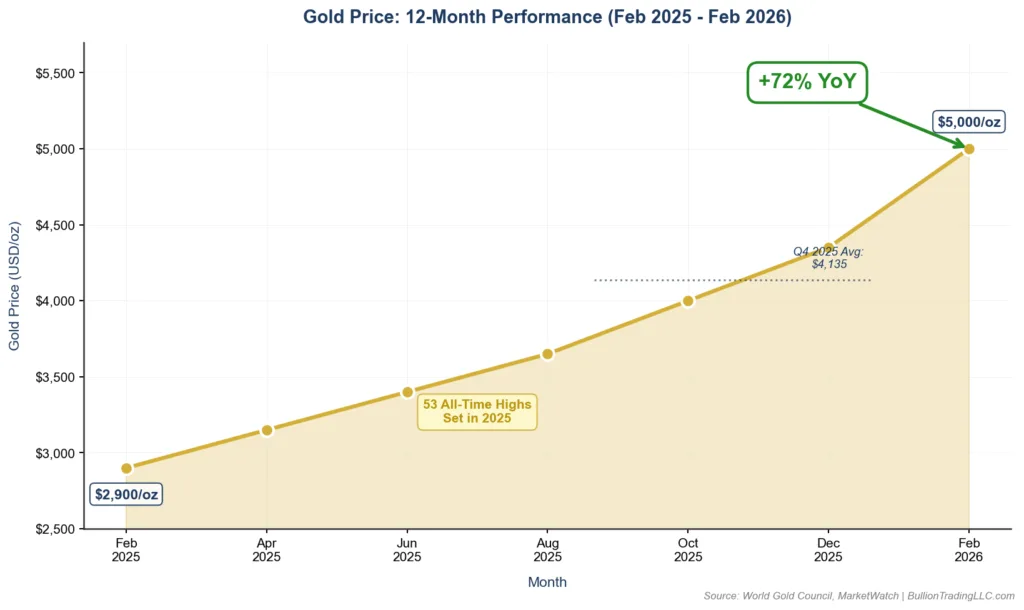
However, context matters significantly here. Gold had appreciated roughly 30% in just four weeks before the correction, driven by a combination of legitimate safe-haven buying and speculative excess. The sell-off, while dramatic, brought prices back toward more sustainable levels without erasing the substantial gains accumulated over the past year. According to MarketWatch data, gold remains up over 73% on a year-over-year basis despite the recent turbulence.
The LBMA gold price set 53 new all-time highs during 2025, with the average fourth quarter price reaching a record $4,135 per ounce. For long-term investors focused on wealth preservation rather than short-term trading, the fundamental case remains intact even as day-to-day price action proves unsettling.
The Dollar Debasement Debate
Much of the recent gold rally stemmed from concerns about “dollar debasement” caused by rising U.S. budget deficits, growing debt burdens, and heavy foreign ownership of American assets. President Trump’s unorthodox mix of trade, tax, and foreign policy since returning to the White House has amplified these concerns among a growing cohort of investors trimming their dollar exposure.
The nomination of Kevin Warsh as Federal Reserve Chair introduces an interesting wrinkle to this narrative. As a relative policy hawk, Warsh is expected to maintain a tighter monetary stance than some alternatives, which could theoretically support the dollar and contain inflation. This realization triggered some unwinding of the “debasement trade” that had fueled gold’s ascent.
However, analysts note that the structural factors driving official sector gold accumulation remain firmly in place. Central bank reserve managers appear committed to diversification regardless of near-term Fed policy shifts. As the World Gold Council’s data demonstrates, this multi-year trend shows no signs of reversing even as tactical considerations occasionally prompt brief pauses in buying activity.
Gold Investment Considerations and Price Outlook
For investors evaluating their gold investment strategy and precious metals exposure, several key considerations emerge from recent events. The volatility experienced over the past week serves as a reminder that even traditional safe-haven assets can experience sharp price swings, particularly when speculative positioning becomes extreme. Position sizing and diversification remain crucial elements of prudent portfolio management.
That said, the fundamental case for gold allocation has not meaningfully changed. Geopolitical uncertainty persists, central banks continue accumulating, and concerns about fiscal sustainability in major economies remain relevant. The World Gold Council’s outlook for 2026 anticipates another year of strong ETF inflows and robust bar and coin demand, underpinned by elevated central bank buying, while jewellery demand is expected to remain weak in a persistent high-price environment.
Physical gold products offer tangible benefits that paper assets cannot match. During periods of extreme market stress, the ability to hold wealth in a form that carries no counterparty risk provides genuine peace of mind.
Looking Forward
The gold market appears to be stabilizing after its wild ride over the past week. Prices have found support above $5,000 per ounce, and the rebound suggests that the correction, while severe, has not fundamentally altered investor appetite for the yellow metal. OCBC analysts noted that “the rebound suggests that forced selling and margin-related liquidation pressures may have faded, at least for now”.
Short-term volatility is likely to persist as markets digest the implications of the new Fed Chair nomination and monitor U.S.-Iran tensions. However, the medium-term gold price outlook remains supportive according to most major forecasters. UBS’s $6,200 target and OCBC’s $5,600 year-end forecast both suggest analysts see further upside potential once current turbulence subsides.
For investors who have been waiting for an entry point, the recent pullback may represent exactly that opportunity. Those already holding positions can take comfort that the structural drivers supporting gold remain intact despite the recent price volatility. Either way, the events of the past week have reinforced gold’s enduring relevance in modern portfolios while reminding everyone that even the world’s oldest safe haven can occasionally surprise.
Whether you are looking to establish a new position or add to existing holdings, Bullion Trading LLC offers competitive pricing on a wide selection of gold coins and bars from trusted mints worldwide. Our experienced team stands ready to help you navigate these dynamic markets and build a precious metals portfolio aligned with your investment objectives.
