


While gold often captures the spotlight in precious metals discussions, silver is quietly experiencing a transformation that could reshape its market fundamentals for decades to come. The global push toward renewable energy and electric vehicles isn’t just changing how we power our world, it’s creating unprecedented demand for the white metal that makes these technologies possible.
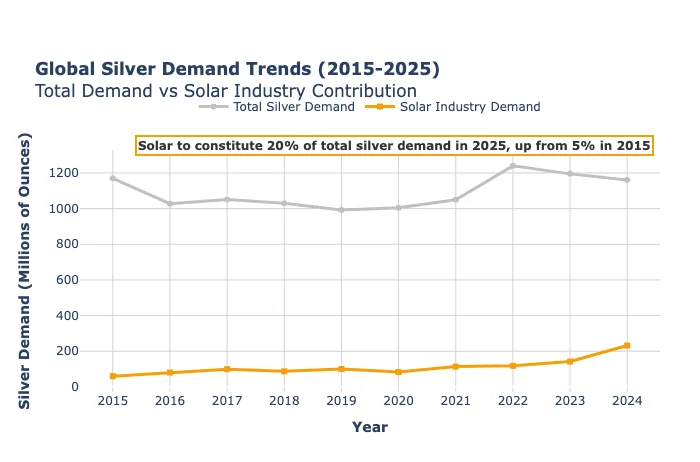
The numbers tell a compelling story: silver consumption for solar technology is expected to constitute 20% of global silver demand in 2025, a significant rise from just 5% a decade earlier. This isn’t just growth, it’s a fundamental shift that positions silver at the center of humanity’s energy transition.
Solar Power: Silver’s Biggest Industrial Story
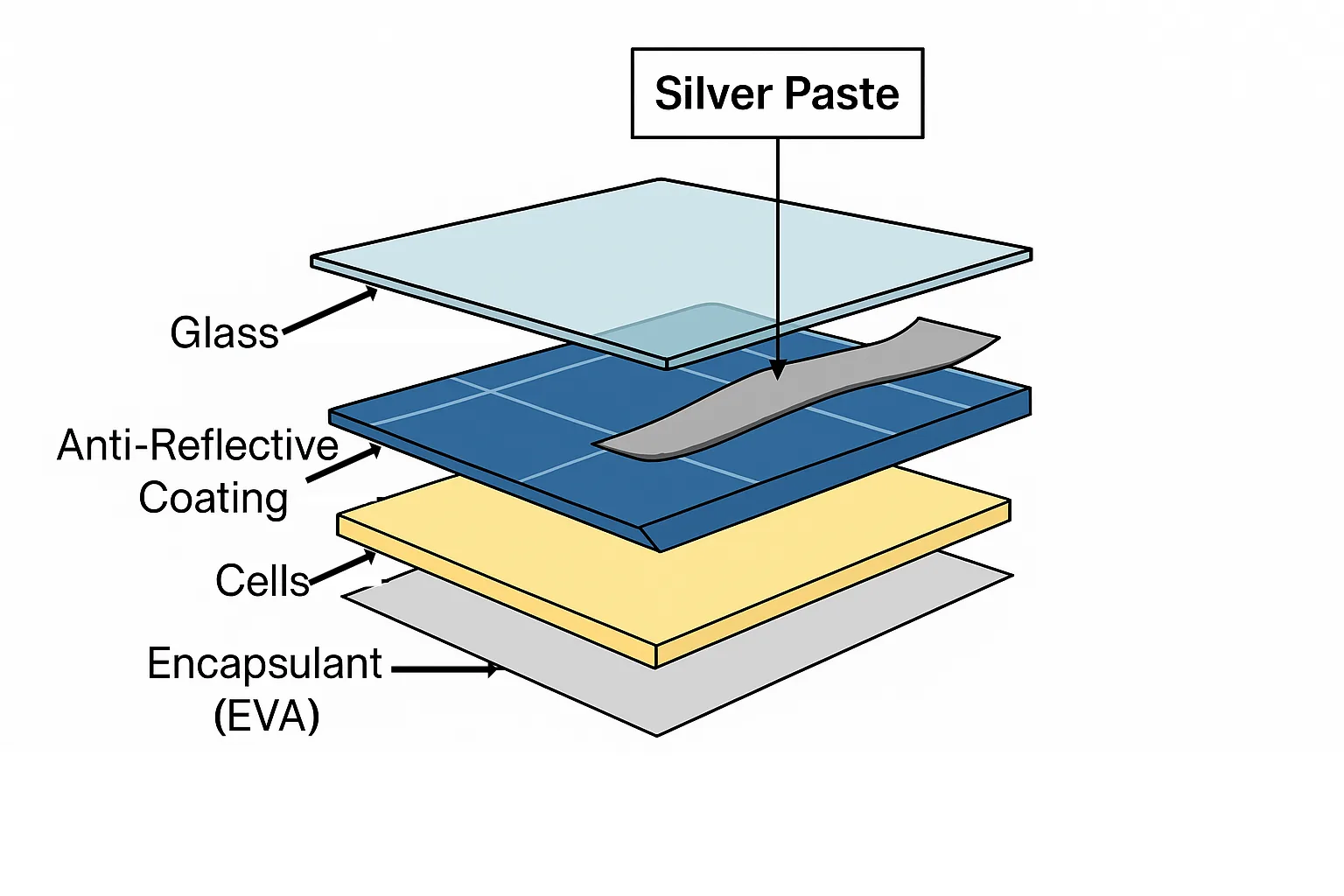
Every solar panel installed on rooftops and solar farms around the world contains something invaluable: silver. An average solar panel uses some 20 grams or 0.643 troy ounces of silver, and without this precious metal, photovoltaic cells simply wouldn’t work as efficiently.
Silver’s unique properties make it irreplaceable in solar technology. Its unmatched electrical conductivity ensures minimal energy loss as electricity flows through the solar cell’s grid pattern. While scientists continue researching alternatives, no material has successfully replicated silver’s performance characteristics at the scale and cost-effectiveness required for mass solar deployment.
The solar industry’s appetite for silver has grown voraciously. In 2023, the demand for silver used in solar PV cells surged to 193.5 million ounces, and it’s projected to reach 232 million ounces in 2024. To put this in perspective, solar applications now account for nearly one-fifth of total global silver demand, compared to less than 6% just nine years ago.
The Solar Boom is Just Beginning
What makes these figures even more remarkable is that the solar revolution is still in its early stages. From 2020 to 2030, solar capacity additions are expected to grow at a robust annualized rate of approximately 17% globally, with cumulative solar PV capacity forecast to expand by over five-fold.
This exponential growth trajectory means silver demand from solar applications could potentially reach astronomical levels. The amount could reach about 273 million ounces, which would constitute about one-fifth of total silver demand, according to investment manager Sprott’s projections.
The geography of this demand is also shifting. While China dominates current solar manufacturing, installations are accelerating globally as governments implement aggressive renewable energy targets to meet climate commitments. Each new solar farm, whether in Texas, Germany, or India, requires the same essential ingredient: silver.
Electric Vehicles: The Second Silver Revolution
While solar panels grab headlines for silver demand, the electric vehicle revolution represents another massive growth driver that’s often overlooked by precious metals investors.
Traditional internal combustion engines already use significant amounts of silver, silver loadings are between 15 and 28 grams per internal combustion engine (ICE) light vehicle. But electric vehicles require substantially more. In hybrid vehicles, silver use is higher at around 18-34g per light vehicle, while battery electric vehicles (BEVs) are believed to consume in the range of 25-50g of silver per vehicle.
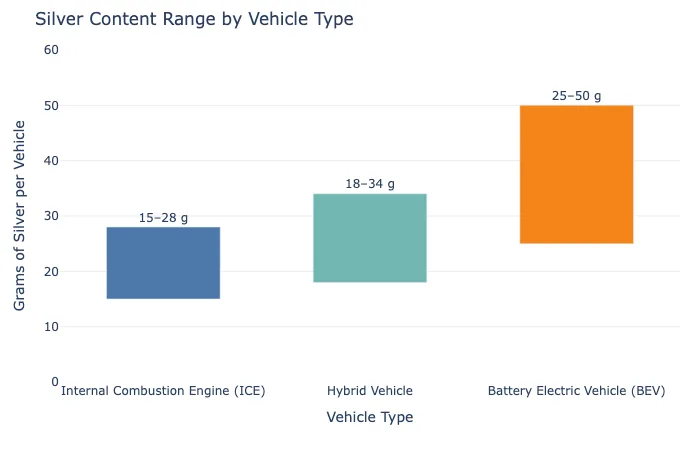
This increased silver content reflects the complexity of electric powertrains. EVs require silver for battery management systems, electric motors, charging infrastructure, and the sophisticated electronic systems that make autonomous driving features possible. As vehicles become more automated and connected, silver requirements will likely increase further.
The Automotive Silver Surge
The automotive industry’s silver consumption is already substantial and growing rapidly. The automotive industry uses approximately 80 million ounces of silver annually, which is expected to increase to 90 million by 2025. This growth coincides with accelerating EV adoption worldwide.
Consider the scale of this transformation: global auto production exceeds 80 million vehicles annually. Even if just 20% become electric or hybrid vehicles by 2030, a conservative estimate given current policy trajectories, the additional silver demand would be measured in tens of millions of ounces annually.
The transition is already underway. Worldwide, hybrid vehicles made up 1% of the vehicle production in 2010, but by 2020, that number had increased to 8%. Battery Electric Vehicles (BEV) accounted for 3% of production last year, a level that is forecast to triple by 2025.
The Supply-Demand Challenge
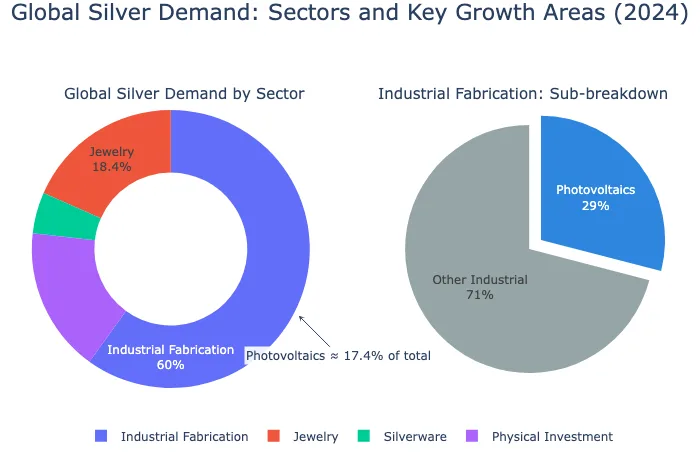
This surge in industrial demand creates a fascinating dynamic for silver markets. Unlike gold, where investment demand typically dominates, silver faces genuine supply constraints from rapidly growing industrial consumption.
Solar and automotive applications represent “inelastic” demand, manufacturers need silver regardless of price because no substitute materials offer comparable performance. This means that as renewable energy and EV adoption accelerate, silver demand becomes less sensitive to price fluctuations.
Mining Production Challenges
Silver mining faces its own constraints. Most silver production comes as a byproduct of mining other metals like copper, lead, and zinc. This means silver supply doesn’t respond quickly to increased demand or higher prices, miners can’t simply decide to produce more silver independently of these other metals.
Coeur Mining is expanding to meet the rising silver demand, completing a significant expansion of a mine in Nevada, which will become the largest primary silver mine in the United States. However, such capacity additions take years to bring online and represent relatively small increases compared to growing industrial demand.
Investment Implications
For precious metals investors, silver’s industrial demand story presents both opportunities and considerations that differ significantly from gold’s investment dynamics.
The Green Premium
Silver benefits from what could be called a “green premium”, additional demand driven by environmental concerns rather than traditional monetary or jewelry uses. This demand comes from governments, corporations, and consumers committed to renewable energy regardless of short-term economic cycles.
Unlike industrial silver demand from traditional manufacturing, which tends to be cyclical, renewable energy demand appears more secular in nature. Climate commitments, regulatory mandates, and falling technology costs create sustained demand growth that’s less dependent on economic cycles.
Price Volatility and Opportunity
Silver’s smaller market size compared to gold means that increased industrial demand can have outsized price impacts. The PV industry’s demand for silver is poised for growth, with projections pointing to a demand increase by up to 20% this year, and such demand surges can create significant price momentum.
However, this same characteristic creates higher volatility. Silver prices tend to be more reactive than gold to both positive and negative market sentiment, making timing more challenging for investors.
The Broader Context
Silver’s renewable energy story fits within a larger narrative about critical materials needed for the energy transition. Governments worldwide are recognizing that securing supplies of these materials is essential for achieving climate goals and maintaining economic competitiveness.
This recognition is leading to policy initiatives designed to secure critical material supply chains, potentially including strategic stockpiling and domestic production incentives. Such policies could provide additional support for silver prices beyond pure market dynamics.
Technology Evolution
While silver demand from current technologies is substantial, emerging technologies could drive even greater consumption. Advances in energy storage, smart grid infrastructure, and new transportation technologies all rely heavily on silver’s unique properties.
The development of autonomous vehicles, for instance, will require sophisticated sensor arrays and computing systems that use significantly more silver than current vehicles. Similarly, next-generation solar technologies and energy storage systems may require even more silver per unit of capacity.
Looking Forward
The convergence of renewable energy adoption and electric vehicle proliferation creates a unique moment in silver’s long history. For the first time, industrial applications are becoming the dominant driver of silver demand, potentially transforming it from a precious metal that happens to have industrial uses into an industrial metal that happens to be precious.
This transformation doesn’t diminish silver’s traditional roles as a store of value or portfolio diversifier. Instead, it adds a new dimension that could provide price support independent of monetary policy or investment sentiment.
The Timeline Challenge
The critical question for investors is timing. Solar installations and EV production are accelerating rapidly, but silver prices haven’t yet fully reflected the scale of coming demand growth. This suggests potential opportunity for investors who position ahead of the supply-demand imbalance becoming more apparent to broader markets.
However, industrial demand growth rarely moves in straight lines. Technology improvements, economic cycles, and policy changes can all affect the pace of renewable energy adoption and, consequently, silver demand growth.
The Investment Case
For precious metals investors, silver’s renewable energy story provides compelling reasons to consider allocation beyond traditional monetary and portfolio diversification arguments:
Structural Demand Growth: Unlike cyclical industrial uses, renewable energy represents long-term secular demand that’s supported by policy mandates and technological cost curves.
Supply Constraints: Silver’s production profile as a byproduct of other mining operations limits supply responsiveness to growing demand.
Price Leverage: Silver’s smaller market size compared to gold means that industrial demand growth can have magnified price impacts.
Portfolio Diversification: Industrial demand provides partial independence from traditional precious metals drivers like monetary policy and financial market sentiment.
The Bottom Line
The green revolution is creating unprecedented demand for silver that goes far beyond its traditional monetary and jewelry applications. As solar panels multiply across rooftops and fields worldwide, and as electric vehicles replace internal combustion engines, silver consumption is entering uncharted territory.
This demand growth comes at a time when silver supply faces constraints from its dependence on byproduct mining production. The combination of surging demand and constrained supply creates market dynamics that could support significantly higher silver prices over the coming decade.
At Bullion Trading LLC, we help investors understand these evolving market dynamics while navigating the opportunities and risks they present. Whether you’re new to precious metals or looking to adjust existing positions, silver’s role in the renewable energy transition represents a compelling addition to the traditional investment case for precious metals ownership.
