
Bullion sales tax · Massachusetts
Massachusetts sales tax on gold and silver
Is gold taxed in Massachusetts?
Only on smaller orders.
Massachusetts exempts gold and silver bullion and coins, and rare numismatic coins, only when the sale totals $1,000 or more; smaller sales, and platinum or palladium bullion at any amount, are taxed at 6.25%.
Platinum and palladium are taxed.
- Investment gold & silver
- Tax-free on orders $1,000 or more
- Order threshold
- $1,000 or more · per transaction/invoice
- Metals covered
- Gold and silver; not platinum and palladium
- Jewelry
- Taxed · about 6.25%
What's taxed in Massachusetts
| What you're buying | Sales tax | What it means |
|---|---|---|
| Gold and silver bars and rounds | Depends on the order | Tax-free when the purchase is $1,000 or more; taxed below that. |
| Gold and silver bullion coins (Eagles, Maple Leafs, Krugerrands) | Depends on the order | Tax-free when the purchase is $1,000 or more; taxed below that. |
| Platinum and palladium bullion (bars, rounds and coins) | Sales tax applies | Massachusetts's exemption doesn't cover platinum or palladium, so they are taxed. |
| Rare and graded (numismatic) coins | Depends on the order | Tax-free when the purchase is $1,000 or more; taxed below that. |
| Jewelry | Sales tax applies | Taxed like other goods in Massachusetts. |
| Medals, collectibles and accessories | Sales tax applies | Taxed like other goods in Massachusetts. |
The rule, in plain English
Massachusetts exempts gold and silver bullion and coins, and rare numismatic coins, only when the sale totals $1,000 or more; smaller sales, and platinum or palladium bullion at any amount, are taxed at 6.25%.
What counts: M.G.L. c. 64H § 6(ll) covers sales of $1,000 or more of (i) rare coins of numismatic value; (ii) gold or silver bullion or coins; or (iii) gold or silver tender of any nation, traded and sold according to its value as precious metal. "The word 'bullion' shall not include fabricated precious metal which has been processed or manufactured for industrial, professional or artistic uses." There is no purity percentage.
“(ll) Sales of one thousand dollars or more of" (i) rare coins of numismatic value; (ii) gold or silver bullion or coins; or (iii) gold or silver tender of any nation traded and sold according to its value as precious metal.”
Still taxed: Any sale under $1,000; platinum and palladium bullion and bullion coins at any amount; fabricated precious metal for industrial, professional or artistic use; jewelry; accessories.
What you would pay: three Massachusetts examples
| Purchase delivered to Massachusetts | Sales tax |
|---|---|
| Silver coins, $500 | about $31 under the $1,000 threshold |
| Gold coins, $5,000 | $0 meets the $1,000 threshold |
| A gold necklace, $1,000 | about $63 jewelry is taxed |
Using Massachusetts's 6.25% state rate plus the average local rate, 6.25% combined (Tax Foundation, January 2026). Your city or county rate may be higher or lower.
Massachusetts and its neighbors
- Connecticut Tax-free on orders $1,000 or more
- New Hampshire No sales tax
- New York Tax-free on orders over $1,000
- Rhode Island Tax-free
- Vermont Taxable
Different rules next door: New Hampshire (no sales tax), Rhode Island (tax-free) and Vermont (taxable). Same as Massachusetts: Connecticut and New York. Tax follows the delivery address, not where you live.
Buying from Bullion Trading LLC with delivery to Massachusetts
No Massachusetts sales tax is added at our checkout. For questions about use tax, ask a tax professional.
Orders ship insured and discreetly packed: USPS under $1,000, FedEx with adult signature from $1,000, usually within 2–3 business days after payment clears. Bank transfer and check are our best price; card and PayPal add 5% (up to $7,500).
One 1 oz gold coin clears Massachusetts's $1,000 threshold on its own
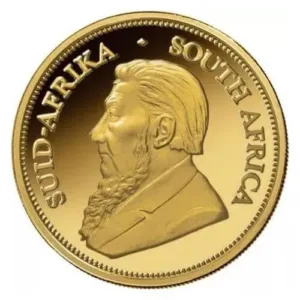
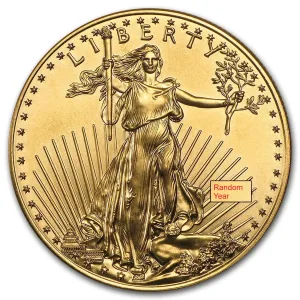
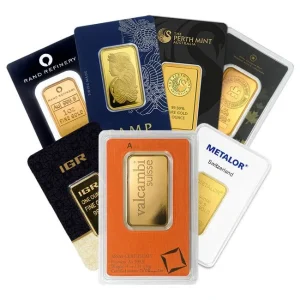
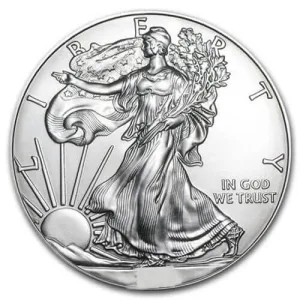
The large price is the check/wire price; the card/PayPal price is listed under it. Prices follow the live spot price.
Selling gold in Massachusetts
Selling gold to a dealer is not a retail purchase, so no sales tax applies. A profit is a capital gain: the IRS taxes gains on gold and silver bullion as collectibles, at up to 28% when held more than a year. Massachusetts taxes long-term gains on collectibles at 12% with a 50% deduction, about 6%, and short-term gains at 8.5%.
Dealers have to report some larger sales to the IRS on Form 1099-B; keep your purchase receipts to show your cost.
We buy bullion at our counter at 20 West 47th Street in New York: walk in with a photo ID and we pay by same-day check. How selling to us works
Local taxes
Massachusetts has no general local sales tax (local options apply only to meals and room occupancy).
Common questions about Massachusetts
Is gold taxed in Massachusetts?
Only on smaller orders. Massachusetts exempts gold and silver bullion and coins, and rare numismatic coins, only when the sale totals $1,000 or more; smaller sales, and platinum or palladium bullion at any amount, are taxed at 6.25%.
Is silver taxed in Massachusetts?
Only on smaller purchases: silver bullion is tax-free in Massachusetts when the purchase is $1,000 or more.
How much do I have to buy to avoid sales tax in Massachusetts?
The purchase has to be $1,000 or more (per transaction/invoice). Below that, Massachusetts sales tax applies to the whole purchase.
A purchase $1,000 or more
Tax-free
Under $1,000
Massachusetts sales tax on the whole purchase
Is gold jewelry taxed in Massachusetts?
Yes. Jewelry is taxed like other goods in Massachusetts (about 6.25% on average with local tax), even when it is made of gold, silver or platinum.
Do I pay tax when I sell gold in Massachusetts?
Selling gold to a dealer is not a retail purchase, so no sales tax applies. A profit is a capital gain: the IRS taxes gains on gold and silver bullion as collectibles, at up to 28% when held more than a year. Massachusetts taxes long-term gains on collectibles at 12% with a 50% deduction, about 6%, and short-term gains at 8.5%.
Selling to a dealer
No sales tax
A gain on the sale
Taxed by the IRS as a collectible, up to 28% when held more than a year
Sources
- M.G.L. c. 64H, § 6(ll) — Exemption for sales of $1,000 or more of rare coins and gold/silver bullion, coins and tender (malegislature.gov refused connections and mass.gov returned 403; wording seen in a mass.gov search snippet and a dealer reproduction, consistent with the official TEB) (checked October 19, 2026)
- Commonwealth of Massachusetts FY2027 Tax Expenditure Budget, item 3.108 — Exemption for Certain Precious Metals: 'transactions with a sale amount of $1,000 or more'; fabricated precious metals excluded (checked October 19, 2026)
- Mass. DOR Letter Ruling 83-28 (Apr. 6, 1983), applying G.L. c. 64H, §§ 1(15), 2 — Gold Coins (mass.gov page read via Internet Archive snapshot of 2025-08-31) (coins by metal; checked October 21, 2026)
- State and Local Sales Tax Rates, 2026 (table: State & Local Sales Tax Rates as of January 1, 2026) (Tax Foundation)
- 2026 Sales Tax Rates, Midyear Update (rates as of July 1, 2026) (Tax Foundation)
- Massachusetts Tax Rates (Massachusetts Department of Revenue (mass.gov))
- IRS Topic 409: capital gains and losses (collectibles rate)
How we research and check this guide: our method.