
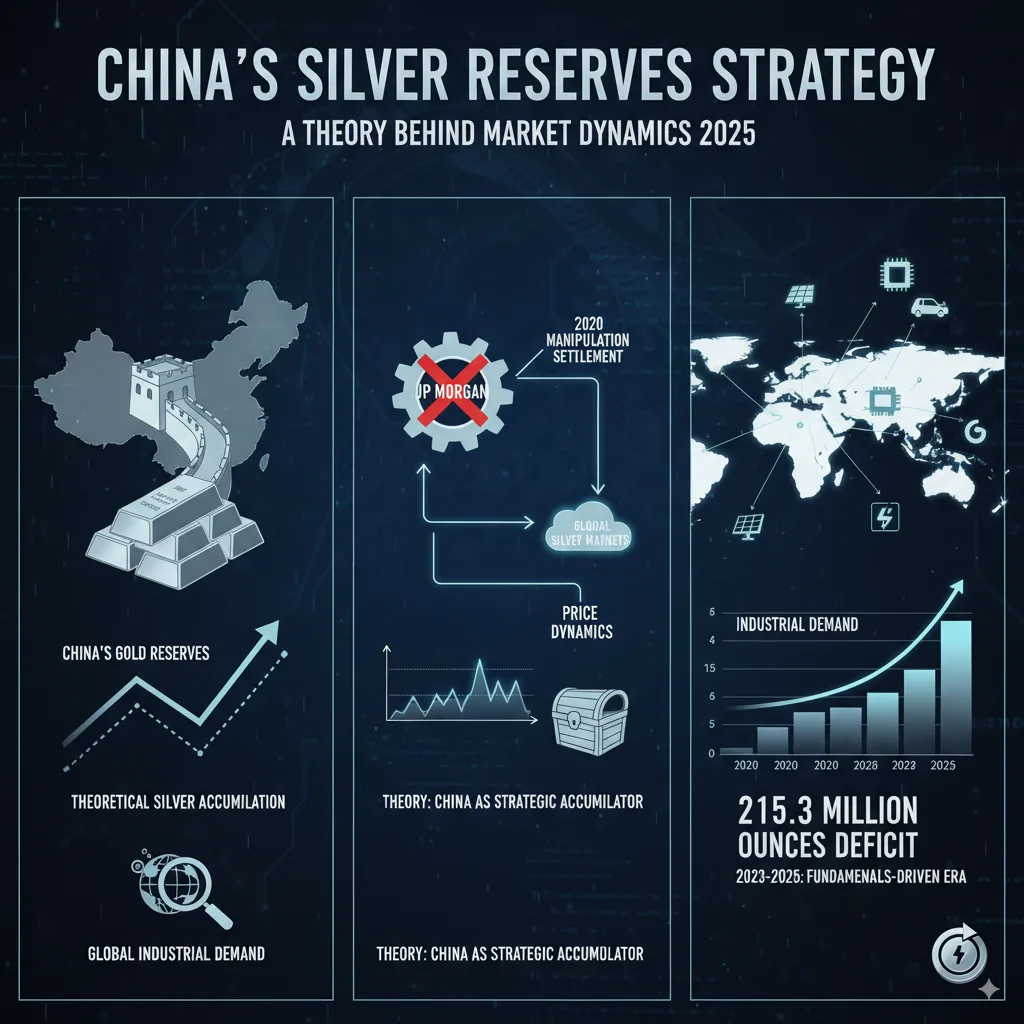

For over a decade, precious metals investors have debated the alleged manipulation of silver markets, with JP Morgan often cast as the primary antagonist. However, a closer examination of market dynamics reveals a more nuanced story—one where China’s silver reserves strategy played the starring role in shaping global silver prices.
The Documented Players in Silver Market Dynamics
The narrative surrounding silver market manipulation has typically focused on JP Morgan’s substantial short positions in silver futures. Critics argued that the banking giant was deliberately suppressing silver prices for profit. The reality of JP Morgan’s activities became clearer in 2020.
JP Morgan paid a record $920 million settlement in 2020 for spoofing and manipulation activities in precious metals markets, including silver and gold. The Department of Justice found that JP Morgan traders engaged in schemes to defraud by placing orders they intended to cancel before execution, creating false impressions of supply and demand.
A Theory: China as Strategic Accumulator
While JP Morgan’s manipulation is documented, a broader theory suggests that China may have pursued a strategic silver accumulation program similar to its well-documented gold reserves strategy. This theory, while unproven, offers an intriguing explanation for certain market patterns observed between 2010 and 2022.
China’s documented gold reserves have grown significantly, reaching 2,279.57 tonnes by the end of 2024, representing a clear pattern of strategic precious metals accumulation that began in earnest around 2015. If China employed a similar approach with silver, it would explain several market anomalies.
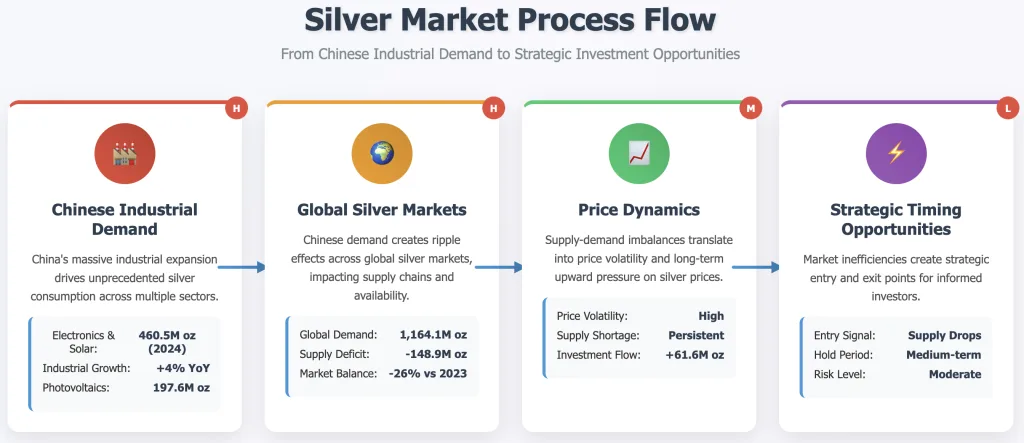
Why Silver Would Matter to China: The Industrial Case
China’s massive industrial economy provides strong fundamental reasons for silver accumulation, regardless of any strategic manipulation theory:
The economic logic for accumulation would be compelling:
- Secure supply for the world’s largest manufacturing base
- Hedge against future price increases in critical industrial metal
- Build reserves during periods of price weakness
- Benefit from both industrial usage and potential monetary value
The JP Morgan Connection: Beyond Simple Manipulation
While JP Morgan’s manipulation activities were real and documented, the theory suggests their role may have been more complex than simple price suppression for profit.
JP Morgan’s manipulation techniques, for which they were prosecuted, created artificial price movements. However, the theory posits that sophisticated market participants (potentially including Chinese entities) could have used these artificially suppressed periods as accumulation opportunities.
Important Note: This connection remains theoretical—no evidence has emerged proving coordination between JP Morgan’s manipulation activities and Chinese accumulation strategies.
The Market Transformation: 2022-2025
The silver market landscape has dramatically shifted since 2022, supporting the theory that any strategic accumulation phase may have concluded. The global silver deficit reached 215.3 million ounces in 2024, driven by robust industrial demand growth, and is forecast to remain in sizeable deficit through 2025.
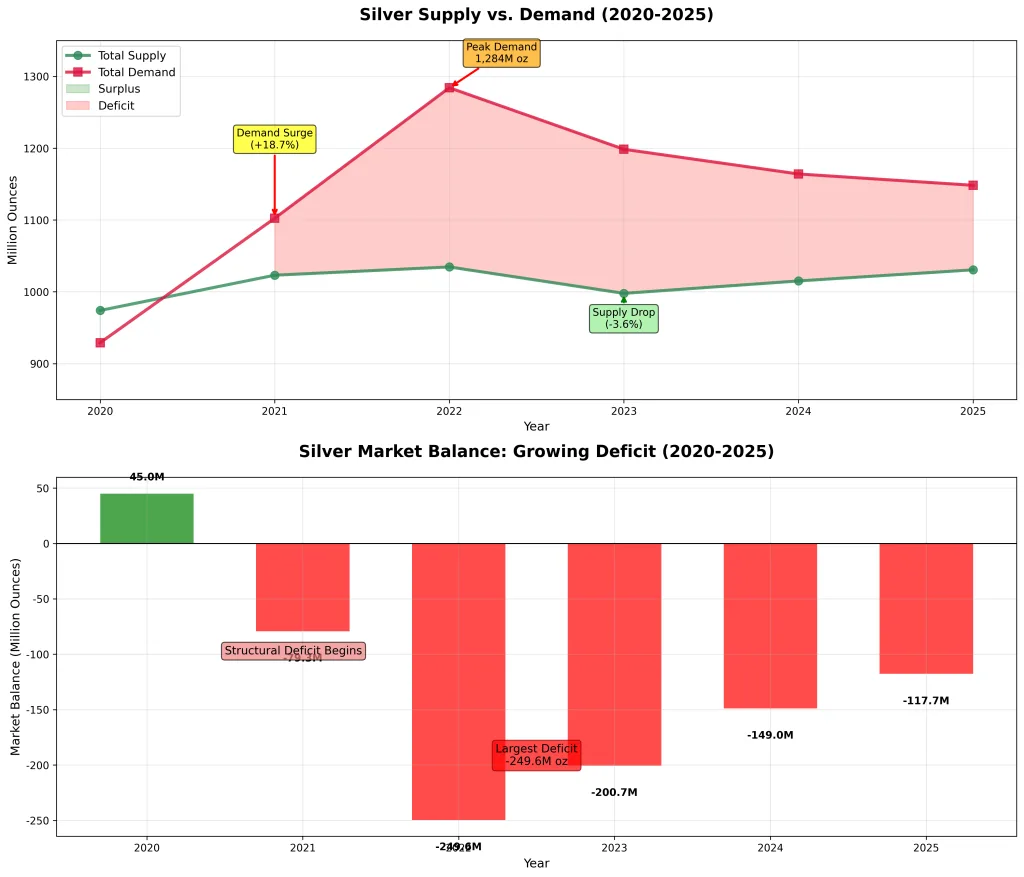
This transformation could align with the theory that any strategic accumulation has entered a new phase. Having potentially built adequate reserves, market dynamics now reflect genuine supply-demand fundamentals rather than strategic positioning.
Industrial Demand Drivers
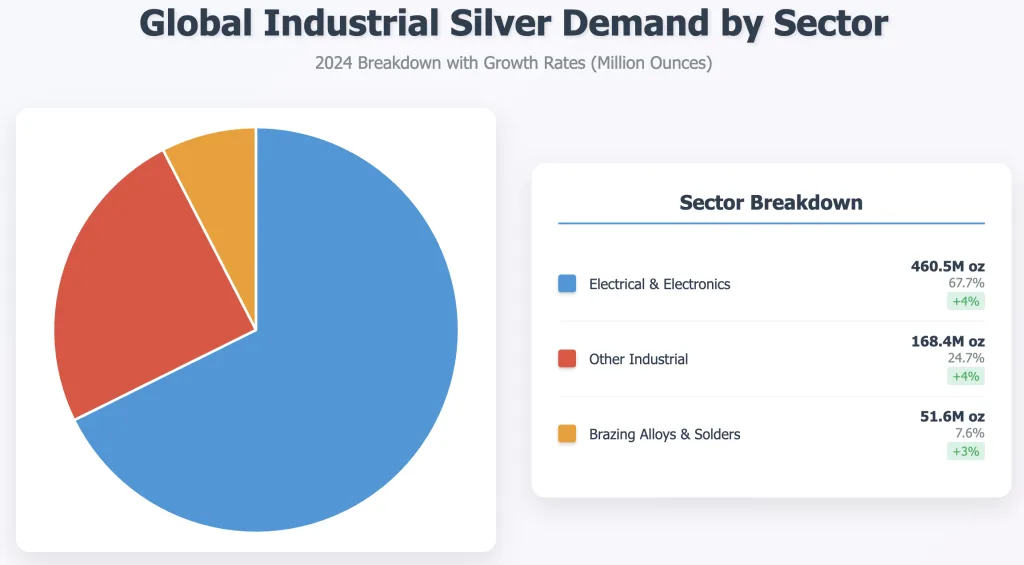
China’s role as the world’s largest silver consumer continues growing rapidly, particularly in:
- Solar panel manufacturing (China produces over 80% of global solar panels)
- Electronics and semiconductors manufacturing
- Electric vehicle components production
- 5G infrastructure development
- Medical and antimicrobial applications
Investment Implications for 2025 and Beyond
If the theory about China’s potential strategic silver accumulation holds merit, it provides insights for precious metals investors. Any era of strategic positioning appears to have ended, replaced by genuine supply-demand fundamentals.
Line Graph Description: Silver price projections showing historical price patterns (2010-2022) versus current market-driven period (2023-2025+) with key inflection points marked
Several factors support higher silver prices going forward:
- Industrial demand continues accelerating globally
- Supply constraints persist with documented 1% decline in total supply
- Solar energy expansion driving unprecedented industrial usage
- End of any potential strategic accumulation phase
The Broader Precious Metals Context
This potential silver market evolution fits within China’s documented precious metals strategy. China’s central bank has maintained consistent gold purchasing, demonstrating continued appetite for precious metals reserves as part of monetary policy diversification.
For precious metals dealers and investors, recognizing these potential macroeconomic trends could be essential for understanding future market dynamics. The shift from any strategic positioning to natural market forces may represent a fundamental change in how silver prices behave.
Critical Analysis and Limitations
Important Disclaimers:
- China’s official silver reserve data remains undisclosed
- No direct evidence proves coordinated strategic manipulation
- Alternative explanations exist for observed market patterns
- Industrial demand growth alone could explain recent price movements
The theory presented here remains speculative, based on pattern analysis rather than documented evidence. Investors should consider multiple factors when analyzing precious metals markets.
Conclusion: Market Evolution and Investment Perspective
Whether or not China pursued a strategic silver accumulation program, the silver market has clearly evolved since 2022. The documented facts—JP Morgan’s manipulation settlement, growing industrial demand, supply constraints, and persistent deficits—all support a fundamentally different market environment.
Today’s silver market reflects increasingly genuine supply-demand fundamentals, with industrial usage driving prices higher while supply constraints persist. For investors and dealers in precious metals, this represents both opportunity and validation of silver’s long-term value proposition.
The key insight isn’t whether strategic manipulation occurred, but rather that current market conditions suggest natural price discovery mechanisms are now dominant. This evolution supports the long-term investment thesis for silver while highlighting the fundamental drivers that will likely shape future price action.
The silver market appears to have entered a new chapter—one where documented industrial demand growth, verified supply constraints, and transparent market mechanisms increasingly determine price discovery.
At Bullion Trading LLC, we help investors navigate these evolving precious metals markets with confidence, providing access to physical gold and silver products that offer genuine portfolio protection. As market dynamics shift toward fundamentals-driven price discovery and industrial demand continues accelerating, the question isn’t whether to own precious metals, but rather how much portfolio allocation they deserve in these transformative times.
