
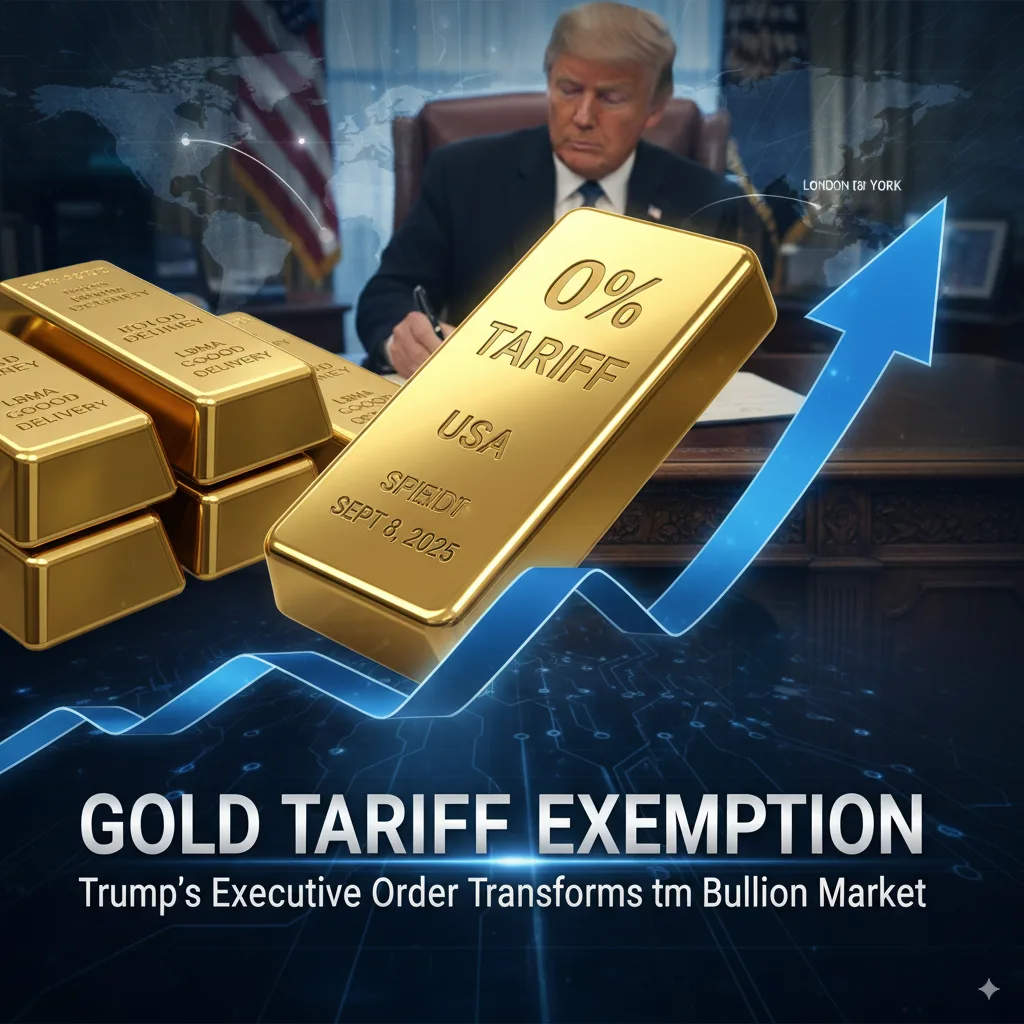

The precious metals industry received a decisive victory this week as the London Bullion Market Association (LBMA) welcomed the White House’s updated tariff schedule, effectively exempting gold bars from import duties for aligned partner countries. This landmark executive order, signed by President Donald Trump on September 5, 2025, establishes a 0% tariff rate on gold bullion imports beginning September 8, marking what the LBMA calls a “significant and positive step for the industry” after months of regulatory uncertainty that had rattled global gold markets.
With gold trading near $3,680 per ounce amid ongoing Federal Reserve policy shifts and geopolitical tensions, this clarification arrives at a critical juncture for both institutional investors and individual bullion buyers. The resolution not only stabilizes cross-border gold trading but fundamentally reshapes how precious metals flow through international markets, reinforcing America’s position as a hub for global gold investment while protecting the interests of precious metals investors nationwide.
🏛️ Trump Gold Tariff Executive Order
Timeline: September 5-8, 2025
The Executive Order: Breaking Down the 0% Gold Tariff Structure
The September 5 executive order represents a comprehensive solution to the confusion that emerged from earlier U.S. Customs and Border Protection rulings. Under the update, gold bars imported from “aligned partner” countries under certain codes of the Harmonized Tariff Schedule of the United States – including 7108.11.00, 7108.12.50, 7108.13.10, 7108.13.55, 7108.13.70, and 7108.20.00 – will face a 0% tariff on entries made after September 8, 2025.
Key Components of the Tariff Exemption:
Harmonized Tariff Schedule Codes Covered The executive order specifically addresses six critical classification codes that encompass the vast majority of investment-grade gold bullion traded internationally. These codes cover everything from standard gold bars to specialized kilobars used by institutional investors.
“Aligned Partner” Country Designation The executive order, issued by President Donald Trump on September 5, sets a 0% tariff for gold bars imported from “aligned partner” countries under specific Harmonized Tariff Schedule codes, effective for entries made after September 8, 2025. This strategic designation includes major gold trading partners while maintaining America’s ability to protect domestic interests through selective trade agreements.
Implementation Timeline The rapid implementation timeline, with the order taking effect just three days after signing, demonstrates the administration’s commitment to resolving market uncertainty swiftly. This quick action prevented potential disruptions to gold supply chains that could have impacted prices and availability.
HTS Codes and Gold Product Types
- 7108.11.00 – Gold, powder form
- 7108.12.50 – Gold, unwrought, non-monetary, other than powder (general bullion bars)
- 7108.13.10 – Gold, unwrought, non-monetary, in bars, other than powder, ≤ 1 kg (e.g., kilobars)
- 7108.13.55 – Gold, unwrought, non-monetary, in bars, > 1 kg but ≤ 10 kg (e.g., 100-oz bars, institutional bars)
- 7108.13.70 – Gold, unwrought, non-monetary, in bars, > 10 kg (large institutional/refinery bars)
- 7108.20.00 – Monetary gold (recognized for central bank or official reserve purposes)
Market Context: Why This Decision Matters Now
The timing of this executive order couldn’t be more significant for the precious metals market. Gold has experienced remarkable strength throughout 2025, driven by multiple converging factors that make tariff clarity essential for maintaining market stability.
Current Gold Market Dynamics
Gold’s performance in 2025 reflects a complex interplay of monetary policy expectations, geopolitical tensions, and inflation concerns. The metal has proven its resilience as a portfolio diversifier, particularly as traditional 60/40 stock-bond allocations face challenges from persistent inflation and interest rate volatility.
The Federal Reserve’s anticipated policy shifts have created an environment where non-yielding assets like gold become increasingly attractive. Central banks globally continue their record pace of gold accumulation, with emerging market central banks particularly aggressive in diversifying away from dollar reserves.
The August Uncertainty Crisis
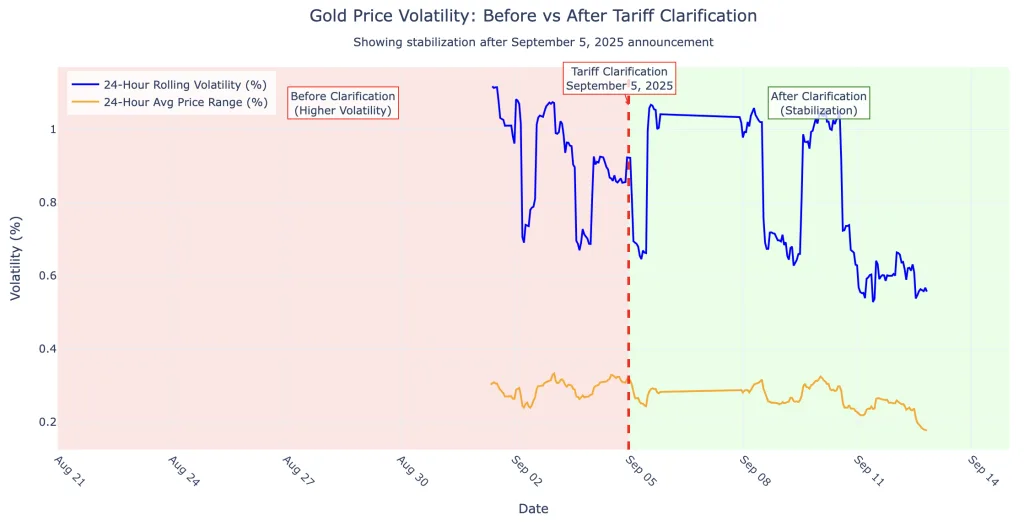
“The White House intends to issue an executive order in the near future clarifying misinformation about the tariffing of gold bars and other specialty products,” a White House official confirmed to CNN on Friday afternoon. The administration’s August promise to address what it termed “misinformation” about gold tariffs preceded weeks of market volatility as traders grappled with regulatory uncertainty.
This period of confusion highlighted the critical importance of clear policy communication in commodity markets. Gold prices experienced unusual intraday volatility as traders attempted to price in potential tariff impacts. There was observable volatility in gold futures and premiums, in part due to uncertainty over tariff rulings. Some market participants expressed concern that regulatory ambiguity was contributing to larger price swings, though documented intraday moves specifically caused by that confusion are not clearly confirmed.
LBMA’s Response: Industry Leadership in Action
The London Bullion Market Association’s swift and positive response to the executive order underscores the significance of this development for global precious metals markets. As the industry’s most influential trade body, the LBMA’s endorsement carries substantial weight with market participants worldwide.
Official LBMA Position
The association characterized the White House update as a “welcome development” that resolves critical uncertainties facing the industry. This clear regulatory framework enables market participants to plan long-term strategies without the overhang of potential tariff disruptions.
The LBMA’s statement emphasized how the executive order addresses concerns that emerged from previous U.S. Customs and Border Protection interpretations, which had suggested tariffs might apply to gold bullion imports. Such uncertainty had threatened to disrupt established trading patterns and potentially increase costs for American investors.
Ongoing Monitoring and Advocacy
The LBMA applauds a new White House order clarifying a 0% tariff on gold bars from partner countries, resolving recent market uncertainty over U.S. import duties. Beyond celebrating this victory, the association continues its vigilant monitoring of regulatory developments affecting precious metals markets.
The LBMA remains engaged in discussions with authorities across multiple jurisdictions, including ongoing conversations about silver tariffs. This proactive approach ensures the industry stays ahead of potential regulatory challenges while advocating for policies that support efficient, transparent precious metals markets.
Beyond Gold: Silver Tariffs and Ongoing Negotiations
While the gold tariff exemption represents a major victory, the precious metals industry continues working toward similar clarity for silver imports. The LBMA’s ongoing discussions with U.S., European, and UK authorities regarding silver tariffs reflect the interconnected nature of precious metals markets.
Silver Market Considerations
Silver presents unique challenges given its dual role as both an investment asset and industrial commodity. Unlike gold, which primarily serves monetary and investment functions, silver’s extensive industrial applications in electronics, solar panels, and medical devices complicate tariff discussions.
The LBMA continues advocating for consistent treatment across precious metals, arguing that arbitrary distinctions between gold and silver tariffs could create market distortions. These efforts align with broader industry goals of maintaining efficient, liquid markets that serve both investors and industrial users.
International Coordination
The association’s multi-jurisdictional approach reflects modern precious metals markets’ global nature. Coordinating with authorities in the U.S., Europe, and UK ensures consistent regulatory treatment that prevents arbitrage opportunities and maintains fair, orderly markets.
| Aspect | Gold | Silver |
|---|---|---|
| Tariff Status | 0% tariff for eligible bullion bars under six HTS codes (7108.11.00, 7108.12.50, 7108.13.10, 7108.13.55, 7108.13.70, 7108.20.00) from “aligned partner” countries (effective Sept 8, 2025). | Unclear . Some silver imports still face duties depending on classification and origin. |
| Recent Developments | Executive Order (Sept 5, 2025) resolved confusion from CBP rulings; LBMA welcomed as “positive step.” | LBMA in discussions with U.S., EU, and UK regulators on consistent treatment; no formal exemption announced. |
| Market Impact | Reduced uncertainty, stabilized volatility, ensured smooth bullion flows to U.S. markets. | Ongoing uncertainty for industrial and investment silver flows; potential cost implications remain. |
| Industry Position (LBMA) | Applauds exemption, continues monitoring regulatory changes. | Advocates parity with gold treatment; warns that different tariffs could distort markets. |
| Next Steps | Monitoring implementation; assessing impact on cross-border trading. | Continued negotiations with regulators to secure clarity and potential tariff relief. |
UK REACH Regulations: Clarifying Gold Kilobar Classification
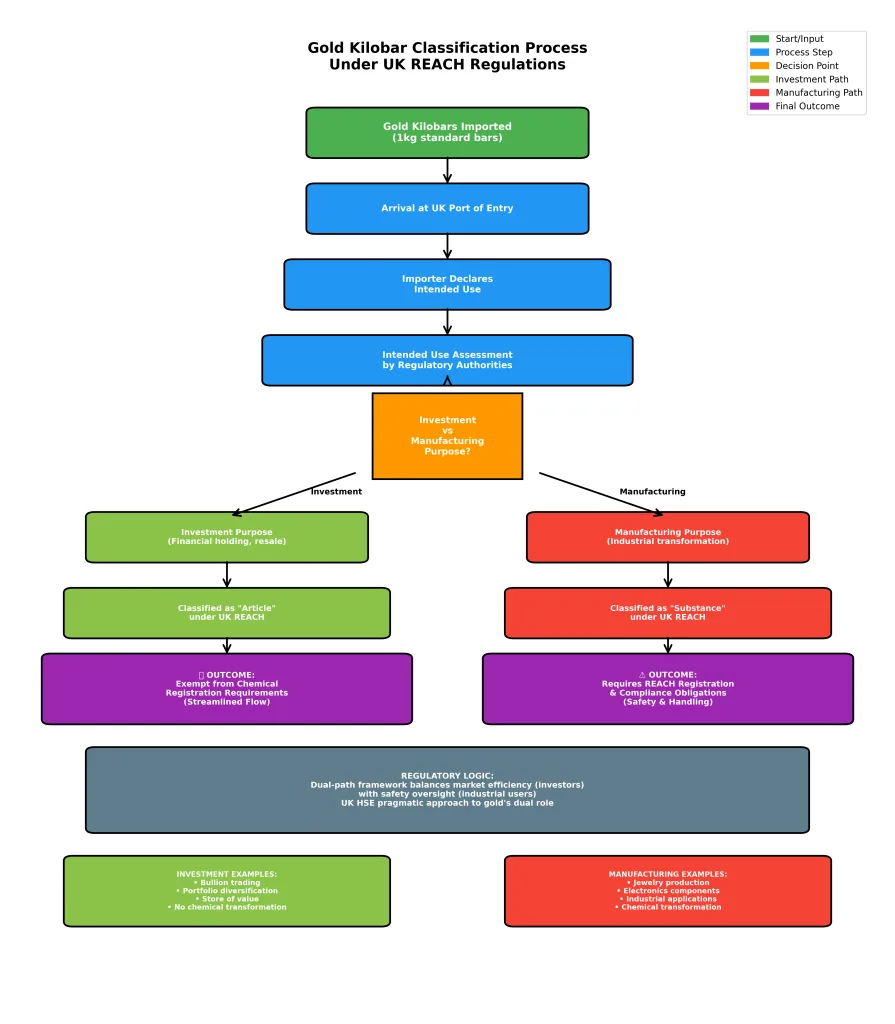
Parallel to U.S. tariff developments, the LBMA has secured important clarifications regarding gold kilobar classification under UK REACH chemical regulations. According to the association, the UK Health and Safety Executive has indicated that kilobars imported as investment products could be classified as “articles,” exempting them from registration requirements.
Investment vs. Manufacturing Distinction
This classification distinction proves critical for market efficiency. Kilobars imported for investment purposes receive streamlined treatment as “articles,” avoiding burdensome chemical registration requirements. However, kilobars supplied for manufacturing purposes, such as jewelry production, may still require registration as chemical substances.
The pragmatic approach recognizes gold’s unique position straddling financial and industrial markets. By differentiating based on end use, regulators balance safety requirements with the need for efficient investment markets.
Implications for Market Participants
For bullion dealers and investors, this clarification removes another layer of regulatory uncertainty. Investment-grade kilobars can flow freely without additional registration burdens, maintaining liquidity and minimizing costs that would ultimately impact investors.
Jewelry manufacturers and industrial users face different requirements, reflecting their transformation of gold into consumer products. This targeted approach ensures appropriate oversight without unnecessarily burdening investment transactions.
Historical Precedent: Trump’s Previous Market Interventions
President Trump’s decisive action on gold tariffs aligns with his administration’s pattern of swift intervention when market stability faces threats. The president had previously attempted to calm markets through public statements asserting gold would not face tariffs, but formal executive action provides the legal certainty markets require.
From Promises to Policy
The evolution from informal assurances to formal executive order demonstrates the administration’s recognition that commodity markets require clear, legally binding frameworks. Verbal commitments, while temporarily reassuring, cannot substitute for formal policy in markets where billions of dollars trade daily.
President Donald Trump moved Friday to exempt graphite, tungsten, uranium, gold bullion and other metals from his country-based tariffs, while subjecting silicone products to the levies. This comprehensive approach to strategic commodities reflects sophisticated understanding of supply chain dynamics and national security considerations.
Strategic Commodity Exemptions
The inclusion of gold alongside other strategic materials like uranium and tungsten signals recognition of precious metals’ critical role in financial markets. By exempting these commodities from reciprocal tariffs, the administration acknowledges their importance extends beyond simple trade considerations.
Impact on Physical Gold Investment
For individual investors and institutions holding or considering physical gold investments, the tariff exemption delivers multiple benefits that extend beyond simple cost savings.
Direct Cost Benefits
The 0% tariff rate ensures American investors pay true market prices for gold bullion without artificial premiums created by import duties. This direct saving makes physical gold ownership more accessible and economical, particularly for larger institutional allocations.
Enhanced Market Liquidity
Removing tariff uncertainty enhances market liquidity by ensuring smooth cross-border gold flows. Major market makers and authorized participants can operate with confidence, maintaining tight bid-ask spreads that benefit all market participants.
Supply Chain Stability
The exemption prevents potential supply disruptions that could have emerged from tariff-related trade redirections. Swiss refiners, London good delivery bars, and other international gold sources continue flowing efficiently to American markets.
Technical Analysis: Gold Price Implications
From a technical perspective, the tariff clarification removes a significant uncertainty overhang that had constrained gold’s recent price action. With this regulatory clarity established, technical analysts can focus on fundamental drivers rather than policy wildcards.
Near-Term Price Targets
With regulatory uncertainty resolved, gold faces clearer technical setup:
- Support Level: $3,600 (psychological level and 50-day moving average)
- Resistance: $3,700 (recent swing high)
- Medium-Term Target: $3,800 (measured move from current consolidation)
Volume and Participation Metrics
Trading volumes in gold futures and ETFs should normalize following the tariff clarification. The removal of regulatory uncertainty typically encourages increased participation from institutional investors who require stable regulatory frameworks for position sizing.
Global Implications: Reinforcing Dollar-Gold Dynamics
The executive order’s broader implications extend beyond American borders, influencing global gold flows and reinforcing the dollar’s role in international precious metals markets.
London-New York Axis Strengthened
By maintaining tariff-free gold flows between major trading centers, the order reinforces the London-New York axis that dominates global gold price discovery. The LBMA Gold Price and COMEX futures continue their symbiotic relationship without artificial barriers.
Competitive Advantage for U.S. Markets
The 0% tariff rate ensures American gold markets remain competitive with other global centers. This prevents potential market share losses to competing jurisdictions that might have capitalized on tariff-related disruptions.
Investment Strategies: Positioning for the New Framework
With regulatory clarity established, investors can implement precious metals strategies with greater confidence. The tariff exemption creates several strategic opportunities for both individual and institutional investors.
Direct Physical Ownership
The elimination of tariff concerns makes direct physical gold ownership more attractive. Investors can accumulate gold bars and coins knowing import costs won’t artificially inflate premiums.
Dollar-Cost Averaging Approaches
With stable import conditions assured, systematic accumulation strategies become more predictable. Regular purchases through dollar-cost averaging can proceed without concern for sudden tariff-related price disruptions.
Portfolio Rebalancing Opportunities
Institutional investors can rebalance portfolios with confidence, knowing gold allocations won’t face unexpected cost increases from tariff changes. This stability enables more precise portfolio optimization and risk management.
Risk Factors and Considerations
While the tariff exemption represents overwhelmingly positive news, investors should remain aware of ongoing considerations affecting gold markets.
Remaining Regulatory Uncertainties
Although gold tariffs are resolved, other regulatory frameworks continue evolving. Digital asset regulations, tax policy changes, and international sanctions all potentially impact precious metals markets.
Geopolitical Dynamics
The “aligned partner” designation remains subject to geopolitical developments. Changes in international relationships could potentially affect which countries qualify for tariff exemptions.
Market Structure Evolution
Electronic trading, algorithmic strategies, and evolving market structure continue transforming gold markets. While tariff clarity helps, these structural changes require ongoing attention from market participants.
The Competitive Landscape: Industry Winners
The tariff exemption creates clear winners across the precious metals ecosystem, from miners to refiners to dealers.
Refinery and Trading Operations
Major refineries benefit from predictable trade flows and stable economics. Swiss refiners, in particular, maintain their crucial role processing and distributing gold to global markets without tariff impediments.
Retail Bullion Dealers
Physical gold dealers can offer competitive pricing without tariff-related premiums. This enables them to serve customers more effectively while maintaining reasonable margins.
Gold ETF Providers
Exchange-traded funds backed by physical gold benefit from efficient creation and redemption processes. The tariff exemption ensures authorized participants can manage fund flows without additional costs impacting investor returns.
Looking Forward: Policy Stability and Market Growth
The executive order potentially marks the beginning of a more stable regulatory era for precious metals markets. Clear, consistent policy frameworks enable long-term planning and investment that benefits the entire ecosystem.
Institutional Adoption Acceleration
With regulatory uncertainty removed, institutional investors may accelerate gold allocations. Pension funds, endowments, and sovereign wealth funds require stable regulatory environments for strategic asset allocation decisions.
Innovation and Product Development
Stable regulatory frameworks encourage financial innovation. New gold-linked products, from structured notes to tokenized gold, can develop with confidence that underlying physical markets remain accessible and efficient.
International Cooperation
The successful resolution of U.S. gold tariff issues may encourage similar clarity in other jurisdictions. International coordination on precious metals regulation could further enhance market efficiency and accessibility.
Practical Implications for Investors
For those considering gold investments following this regulatory clarity, several practical considerations merit attention:
Timing Considerations
The September 8 implementation date has already passed, meaning current gold purchases benefit from the 0% tariff rate. This creates no urgency to rush purchases based on regulatory deadlines, enabling measured, strategic accumulation.
Product Selection
With tariff concerns eliminated, investors can focus on product selection based on investment objectives rather than import cost considerations. Whether choosing American Eagles, Canadian Maples, or Swiss bars, the decision can prioritize quality and liquidity over tariff optimization.
Storage and Custody
The stable regulatory environment supports long-term storage strategies. Whether utilizing home safes, bank vaults, or professional depositories, investors can plan with confidence that regulatory shifts won’t disrupt their holdings.
Conclusion: A New Chapter for American Gold Markets
The White House’s executive order establishing 0% gold tariffs represents far more than technical regulatory adjustment, it’s a clear affirmation of gold’s essential role in modern investment portfolios and the global financial system. The White House updates its tax schedule, exempting gold bars from tariffs, a major relief for the precious metals market, starting September 8, 2025.
By providing definitive regulatory clarity, the Trump administration has removed a significant barrier to efficient precious metals markets, benefiting everyone from individual investors building retirement portfolios to central banks managing national reserves. The LBMA’s enthusiastic endorsement validates this policy as a victory for market participants worldwide.
As gold continues its role as portfolio insurance, inflation hedge, and store of value, this regulatory certainty couldn’t arrive at a more crucial time. With Federal Reserve policy evolving, geopolitical tensions persisting, and currency debasement concerns growing, gold’s investment case remains compelling, now reinforced by favorable regulatory treatment.For investors seeking to capitalize on this favorable environment,
Bullion Trading LLC stands ready with comprehensive precious metals solutions. Our extensive inventory of gold bullion, silver products, and platinum offerings provides the physical assets investors need to implement sophisticated portfolio strategies in this new era of regulatory clarity.
