

Your precious metals investment represents significant financial value and long-term wealth preservation. Whether you’ve acquired gold bars, silver coins, or platinum bullion, proper care and maintenance directly impact both the condition and resale value of your holdings. Understanding proper cleaning and maintenance techniques protects your investment from unnecessary depreciation while ensuring your bullion remains liquid and easily tradeable.
LBMA’s Good Delivery rules and technical specifications stress that bar appearance and surface finish are important for market acceptance in the wholesale market. While wholesale settlement is driven by weight and purity, poor appearance can affect acceptability and retail premiums. This comprehensive guide examines the most effective, safe methods for cleaning and maintaining your bullion, backed by industry best practices from leading mints, grading services, and precious metals authorities.
Investment Bullion vs. Numismatic Coins: Know the Difference
Before touching any cleaning solution, understand this fundamental principle: the type of precious metal product you own determines whether you should clean it at all.
Investment Bullion includes modern bars, rounds, and government-issued coins purchased primarily for metal content. Examples include American Silver Eagles, Canadian Maple Leafs, and gold bars from recognized refiners. These trade based on spot price plus a modest premium, and maintaining cleanliness preserves value.
Numismatic Coins derive value from rarity, historical significance, and condition grade rather than just metal content. These include collectible coins, proof coins, and limited mintages. The Professional Coin Grading Service emphasizes an ironclad rule: never clean numismatic coins. Even gentle cleaning can leave microscopic scratches, potentially destroying hundreds or thousands of dollars in value.
This guide focuses exclusively on investment bullion products valued primarily for their metal content.
For investment bullion, cleaning is appropriate when tarnish affects appearance, fingerprints are visible, environmental contaminants have accumulated, or you’re preparing pieces for sale. However, the industry advises: when in doubt, don’t clean. Minor tarnish rarely affects bullion value, and improper cleaning causes more harm than good.
Prevention: Your Best Cleaning Strategy
Proper Handling Techniques
The most effective cleaning strategy is preventing contamination in the first place. Natural oils, acids, and salts from your skin transfer to precious metals during handling, causing tarnish and discoloration over time.
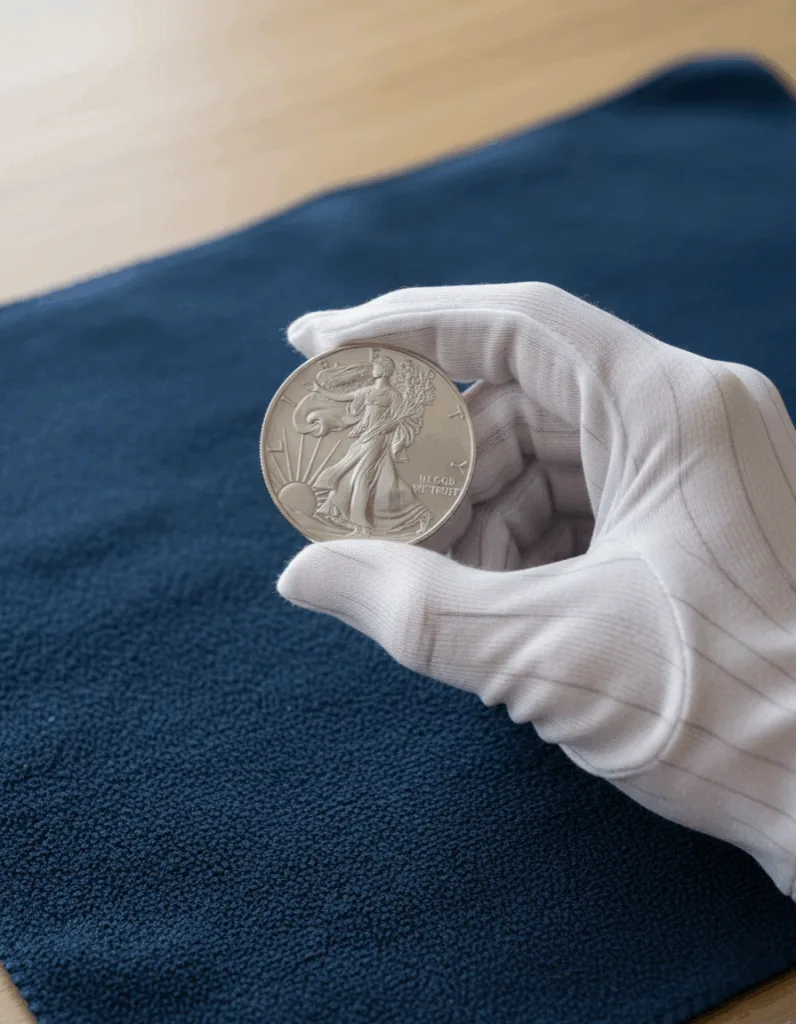
Always Handle by the Edges: Grasp coins and bars by the rim or edges, never touching the face or reverse. This prevents fingerprint transfer and minimizes surface contact.
Wear Clean Cotton Gloves: For valuable pieces or extensive handling, wear lint-free cotton gloves, the industry standard. White cotton gloves are available inexpensively from photography supply stores.
Handle Over Soft Surfaces: Work over a soft towel or felt pad. If you drop a piece, it lands on a cushioned surface rather than hard floor, preventing dents and edge damage.
Minimize Handling Frequency: The less you handle your bullion, the better. Resist the temptation to frequently remove pieces from storage. The United States Mint and other authorities advise handling coins by the edges and using cotton gloves whenever possible, careful handling greatly reduces the risk of fingerprints and surface damage.
Optimal Storage Conditions
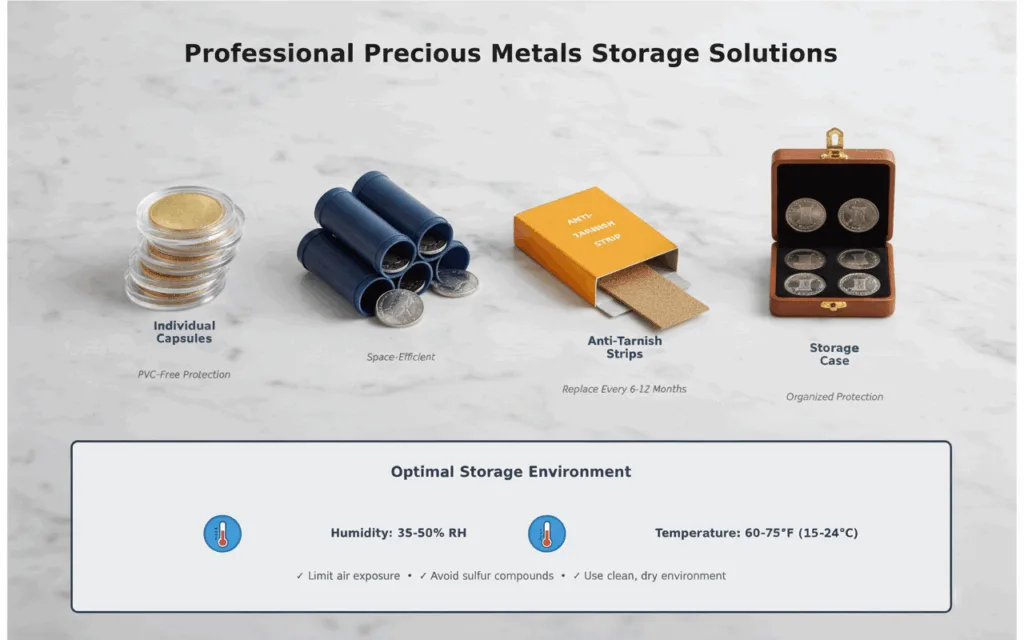
Proper storage prevents most cleaning needs. Silver is particularly susceptible to tarnishing when exposed to moisture and sulfur compounds. Conservation experts and museum guidance recommend maintaining humidity levels between 35% to 50% and stable temperatures between 60-75°F (15-24°C). Limiting air exposure slows tarnishing significantly.
Storage Solutions:
Individual Capsules: Clear acrylic capsules provide excellent protection. Ensure they’re PVC-free and won’t react with metal. Manufacturers like Air-Tite produce capsules for various coin sizes.
Tubes and Rolls: Stackable tubes offer space-efficient storage for multiple coins. Government-issued coins often come in original mint tubes that provide adequate protection.
Anti-Tarnish Materials: Include anti-tarnish strips or papers in storage containers. These absorb airborne sulfur compounds that cause tarnishing and work well for bulk silver storage. Follow manufacturer recommendations for replacement, typically every 6-12 months depending on environmental conditions.
Professional Vaults: For significant holdings, professional vault storage or bank safe deposit boxes offer superior environmental control and security. Many investors use strategic allocation between home storage and professional vaults.
How to Clean Gold Bullion Safely
Gold’s remarkable chemical stability makes it one of the easiest precious metals to maintain. Pure 24K gold doesn’t tarnish or corrode. Gold bullion fineness varies, 24K (.9999 fine), 22K (.9167 fin), and gold bars (.995+ fine), but even lower karat gold requires minimal maintenance.
The Gentle Cleaning Method
Materials Needed: Distilled water, mild unscented dish soap, soft-bristled brush (baby toothbrush), lint-free microfiber cloths, cotton gloves, and a soft towel.
Process:
- Work over a soft towel on a flat surface wearing cotton gloves.
- Mix lukewarm distilled water with 2-3 drops of mild dish soap in a clean glass bowl.
- Soak the gold for 5-10 minutes to loosen dirt and oils.
- Gently brush with soft bristles using circular motions if needed, focusing on crevices.
- Rinse thoroughly under lukewarm distilled water to remove all soap residue.
- Pat dry with a lint-free cloth, then air dry completely for 15-20 minutes.
- Optionally, gently buff with a jeweler’s cloth for extra luster.
Never use: Chlorine bleach (damages gold alloys), abrasive cleaners, commercial jewelry cleaners, ultrasonic cleaners, harsh chemicals, or paper towels. Most industry and conservation authorities, including jewelers, mints, and grading services, warn that aggressive cleaning often does more harm than good and can reduce a piece’s market value.
How to Clean Silver Bullion and Remove Tarnish
Unlike gold, silver is highly reactive with sulfur compounds in the air, forming silver sulfide, the black or rainbow-colored tarnish on silver surfaces. This natural reaction is inevitable with air exposure, but proper care dramatically slows it. Even .999 fine silver will eventually tarnish, though buyers prefer bright, untarnished metal.
The Baking Soda Electrochemical Method (For Investment Bullion Only)
This widely-used method employs an electrochemical process that reverses tarnishing without physical abrasion:
Materials Needed: Aluminum foil, baking soda, distilled water, glass or ceramic bowl, soft cloth, and cotton gloves.
Process:
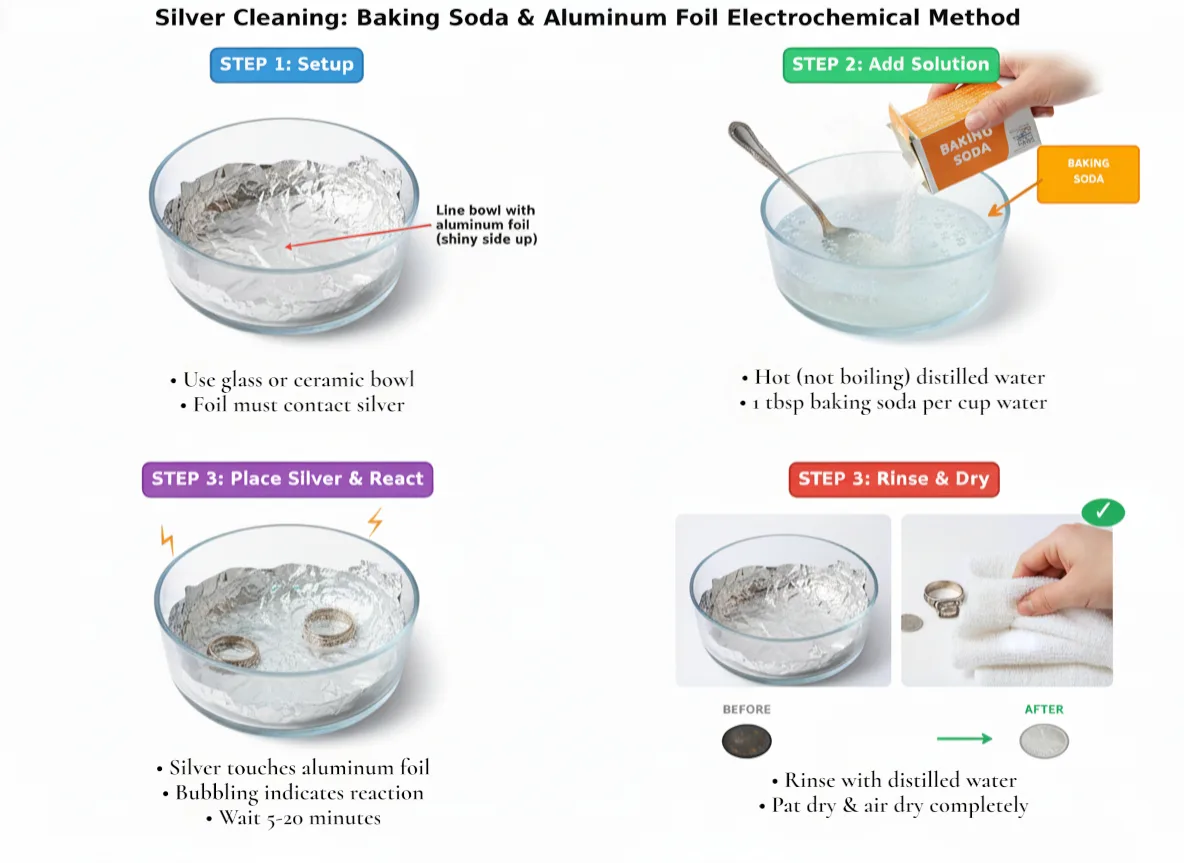
- Line a glass bowl with aluminum foil, shiny side up. The foil must contact the tarnished silver.
- Pour hot (not boiling) distilled water into the bowl. Add 1 tablespoon of baking soda per cup of water and stir until dissolved.
- Place silver pieces in solution, ensuring they touch the aluminum foil. You’ll see bubbling, this indicates the reaction is working.
- Wait 5-10 minutes for light tarnish, 15-20 minutes for heavy tarnish. The tarnish transfers from silver to aluminum.
- Remove and rinse thoroughly with distilled water.
- Pat dry and allow to air dry completely before storage.
This electrochemical method is effective for removing silver sulfide tarnish and is gentler than physical polishing on modern investment bullion.
Important Caution: This method removes tarnish but can alter original factory toning, reduce aesthetic patina, and may damage plated items. Never use this method on numismatic coins, proof coins, antique silver, or any piece with collectible value beyond its metal content. When uncertain about a piece’s value or appropriate cleaning method, consult a professional conservator before proceeding.
Alternative Methods
Soap and Water: For minimal tarnish, use the same gentle soap method described for gold. This is preferable for light tarnish.
Commercial Silver Polishes: Products like Wright’s Silver Cream effectively remove tarnish but contain mild abrasives. Use sparingly for heavy tarnish on investment bullion only. Never use on numismatic coins. Apply to cloth (not directly to silver), use straight-line motions, rinse thoroughly, and dry completely.
Special Care for Different Bullion Types
Government-Issued Coins: Modern coins like American Silver Eagles and Canadian Maple Leafs feature special mint finishes that require extra care. Minimize cleaning whenever possible, keep coins in original mint capsules, and use only the gentlest methods if cleaning becomes necessary.
Gold and Silver Bars: Bars feature stamped markings indicating weight, purity, and refiner identity. These markings must remain clearly legible for authentication. Avoid excessive scrubbing on stamped areas, and ensure serial numbers stay perfectly legible.
Proof and Commemorative Coins: Treat these as numismatic coins regardless of where you purchased them. Do not clean these coins under any circumstances. Their value depends on maintaining original mint condition, and cleaning damage cannot be undone.
Maintenance and Documentation
Regular Inspection Schedule
Quarterly Reviews: Every three months, inspect your bullion for tarnishing, spotting, or environmental damage. Early intervention prevents minor issues from becoming serious problems.
Annual Deep Inspection: Yearly, remove all pieces from storage, inspect storage materials, replace anti-tarnish strips, and assess storage conditions. This is also an excellent time to review your holdings and update your investment strategy.
Documentation for Insurance
Maintain detailed records including high-quality photographs, purchase documentation, serial numbers, condition assessments, and storage locations. This documentation serves insurance claims, estate planning, and sale preparation.
Critical Mistakes to Avoid
Over-Cleaning: The most common error is cleaning too frequently or aggressively, gradually wearing away surface metal and diminishing luster. Clean only when necessary.
Using Tap Water: Tap water contains chlorine, fluoride, and minerals that can leave spots and accelerate tarnishing. Prefer distilled or deionized water for cleaning and rinsing precious metals, as it eliminates the risk of mineral deposits and chemical reactions.
Rubbing Too Hard: Aggressive scrubbing creates microscopic scratches that accumulate over time. Even soft cloths cause scratching with excessive pressure.
Improper Drying: Allowing cleaned bullion to air dry in humid environments or returning damp pieces to storage guarantees water spotting and accelerated tarnishing.
Cleaning Numismatic Coins: The single most expensive mistake is cleaning coins with collectible value. Even gentle cleaning can destroy hundreds or thousands of dollars in value instantly and permanently.
When to Seek Professional Help
For bullion with significant numismatic value, severe tarnishing or damage, or when uncertain about cleaning, professional conservation through services like Numismatic Guaranty Company (NGC) or Professional Coin Grading Service (PCGS) ensures proper treatment.
Professional conservation and restoration services vary in cost depending on the item’s value and the work required. Basic evaluations may start around $10-15, while conservation services are often calculated as a percentage of the item’s fair market value (typically 4-6% with minimum fees of $25-50). Full grading and restoration services for valuable pieces can range from $50 to several hundred dollars. These fees protect potentially much higher values, professional conservators understand proper techniques for various metals, finishes, and historical pieces that amateur cleaning could permanently damage.
Conclusion: Prevention First, Gentle Cleaning When Needed
Proper bullion maintenance comes down to prevention through proper handling, optimal storage, and environmental controls. When cleaning becomes necessary, use the gentlest effective method, soap and distilled water for gold, the baking soda electrochemical method for silver.
Remember that investment bullion’s value derives from metal content. The London Bullion Market Association confirms that wholesale bullion trades based on weight and purity, not appearance, though retail buyers often prefer clean metal. Most importantly, know when not to clean, numismatic coins should never be cleaned at home.
Your precious metals investment represents wealth preservation and financial security. Protecting that investment through proper care ensures your bullion retains maximum value for years to come. Whether building positions for retirement, diversifying your portfolio, or preserving wealth for future generations, these maintenance practices protect your investment’s integrity.
For investors looking to expand their precious metals holdings with confidence, Bullion Trading LLC offers comprehensive selections of gold, silver, platinum, and palladium bullion backed by expert guidance and investor education. Our inventory includes government-issued coins, premium bars from recognized refiners, and diverse products to suit every investment strategy and budget.
