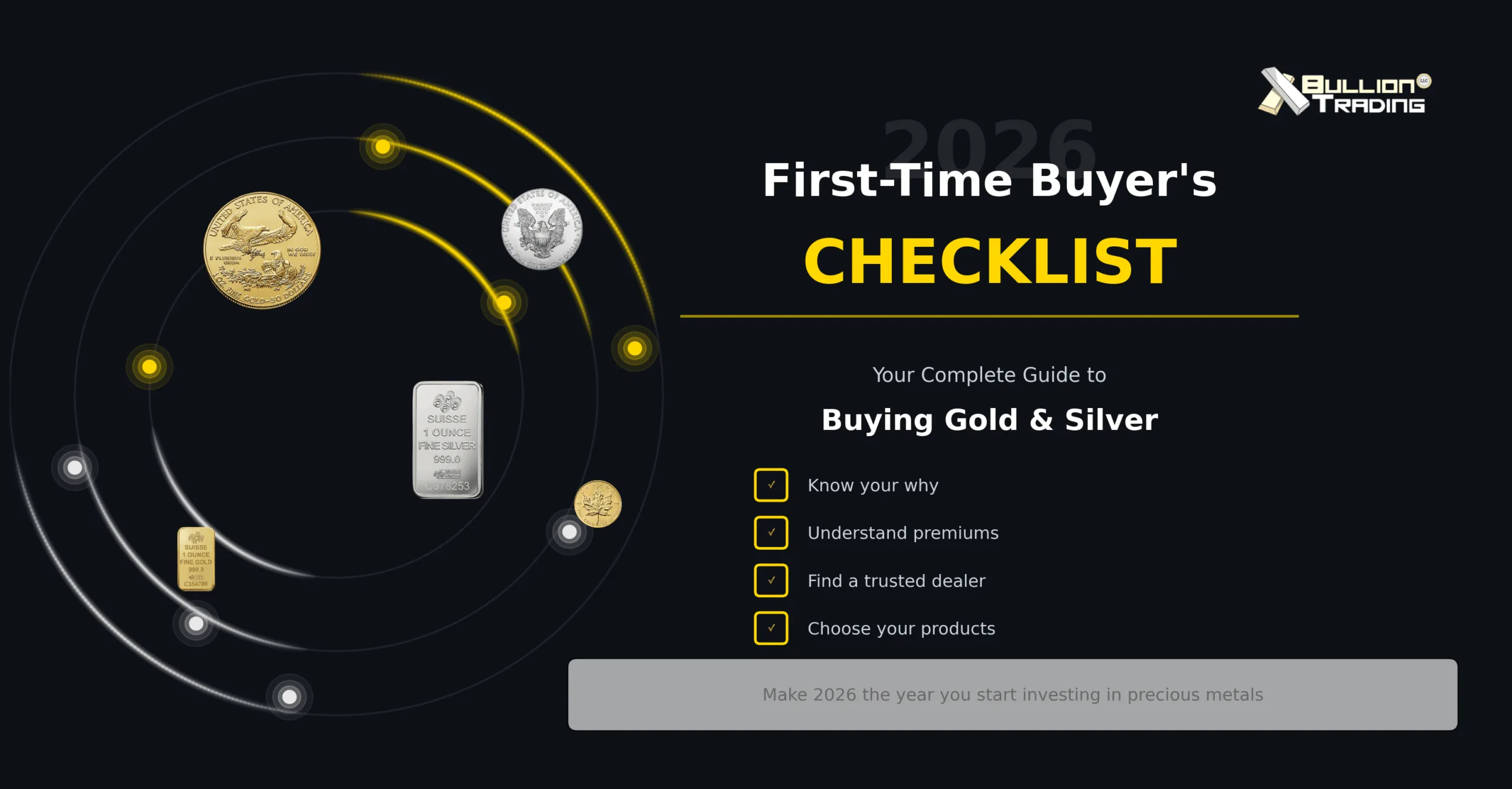

Every January, millions of people kick off the new year with resolutions. And one of the most common? Getting their finances in order. Whether that means paying off debt, building savings or finally starting to invest, financial security is always at the top of the list.
As we head into 2026, more and more people are turning to precious metals. With gold above $4,300 per ounce and silver near $60 (according to World Gold Council data), it’s hard to ignore. Maybe a friend mentioned they’ve been buying gold coins. Maybe you’ve seen news about central banks loading up on gold. Or maybe you’re just looking for a way to protect your savings from inflation and economic uncertainty.
If buying gold or silver is on your 2026 to-do list, you’re in good company. But if you’ve never bought precious metals before, it can feel confusing. What’s a premium? How do you know if a dealer is legit? Should you buy coins or bars? Gold or silver?
Don’t worry. As a first-time precious metals buyer, you don’t need to be an expert. It’s actually pretty simple once you know the basics. This guide will walk you through everything you need to know before making your first purchase.
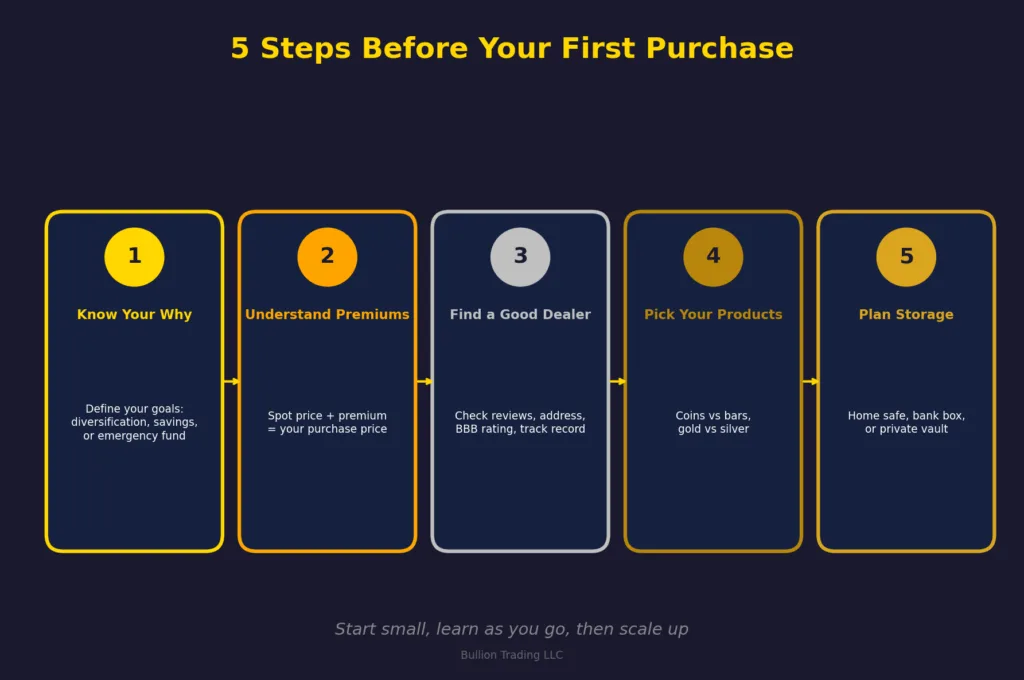
Step 1: Know Why You’re Buying
Before you start shopping, ask yourself: why do I want to own gold or silver? Your answer will help you decide what to buy.
Some people buy precious metals to diversify their investments. Gold and silver don’t move with the stock market, so they can help balance your portfolio.
Others are worried about inflation eating away at their savings. With U.S. debt over $38 trillion, a lot of people want something real that holds its value. Some want an emergency backup they can access no matter what happens with banks. And many are simply looking for a better way to save long-term, or want something tangible to pass on to their kids.
Why does this matter? Because your reason affects what you should buy. If you want emergency money, smaller coins are better because they’re easier to sell. If you’re focused on getting the most metal for your money, bars might make more sense.
For more on matching products to your goals, check out our piece on gold’s job in your investment strategy.
Step 2: Understand Premiums (Why You Pay More Than Spot Price)
Here’s something that trips up a lot of first-time buyers: you won’t pay the “spot price” you see online. You’ll pay more. That extra amount is called the premium.
This isn’t a scam. It’s just how the market works. Someone has to mine the metal, refine it and turn it into a coin or bar. Dealers have to buy inventory, store it safely, pay staff and keep the lights on. And when demand spikes, premiums go up because everyone wants the same products.
Here’s what typical premiums look like right now:
| Product | Premium Over Spot |
| 1 oz Gold Bars | 2-4% |
| 1 oz Gold Coins (Eagles, Maples) | 4-6% |
| 1/10 oz Gold Coins | 10-18% |
| 1 oz Silver Coins (Eagles) | 15-25% |
| 1 oz Silver Bars/Rounds | 8-15% |
Notice how smaller coins have higher premiums? That’s because it costs almost the same to make a 1/10 oz coin as a 1 oz coin, but you’re spreading that cost over less metal.
Important: If someone offers you gold or silver at spot price or below, walk away. It’s either fake, they won’t deliver, or there are hidden fees. Real precious metals always cost more than spot.
Step 3: Find a Reputable Dealer
This is huge. There are great dealers out there, and there are scammers. A few minutes of research can save you a lot of headaches.
Start by looking for a real physical address. Good dealers have locations you can verify.
Check if they belong to industry organizations like ICTA, PNG, or ANA. Read their BBB profile to see how they handle complaints. Look at reviews on Trustpilot, Google and forums. Don’t expect perfection. Any business with thousands of customers will have some complaints. What matters is how they handle them.
Dealers who’ve been around 10+ years have survived market crashes and built real reputations. And good dealers are always upfront about returns and exchanges.
Watch out for red flags: prices way below everyone else, pushy salespeople, weird payment requests like gift cards or crypto only, no real address, or dealers pushing expensive “rare” coins on beginners.
Worried about fakes? Our guide on how to spot fake gold and silver shows you what to look for.
Step 4: Coins vs. Bars – What Should You Buy?
Both contain real gold or silver. The difference is in how they’re made and what they cost.
Government-Minted Coins
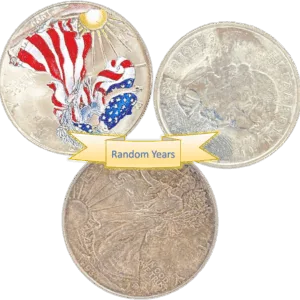
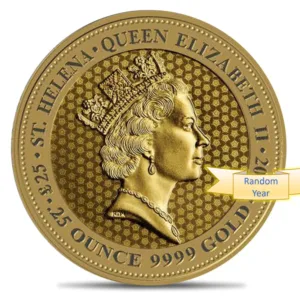
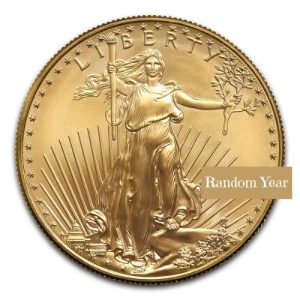
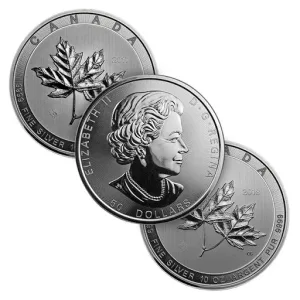
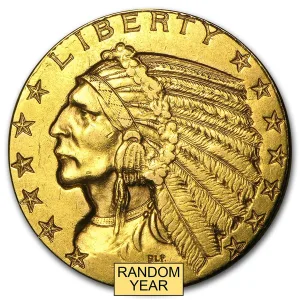
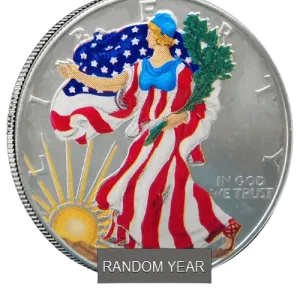
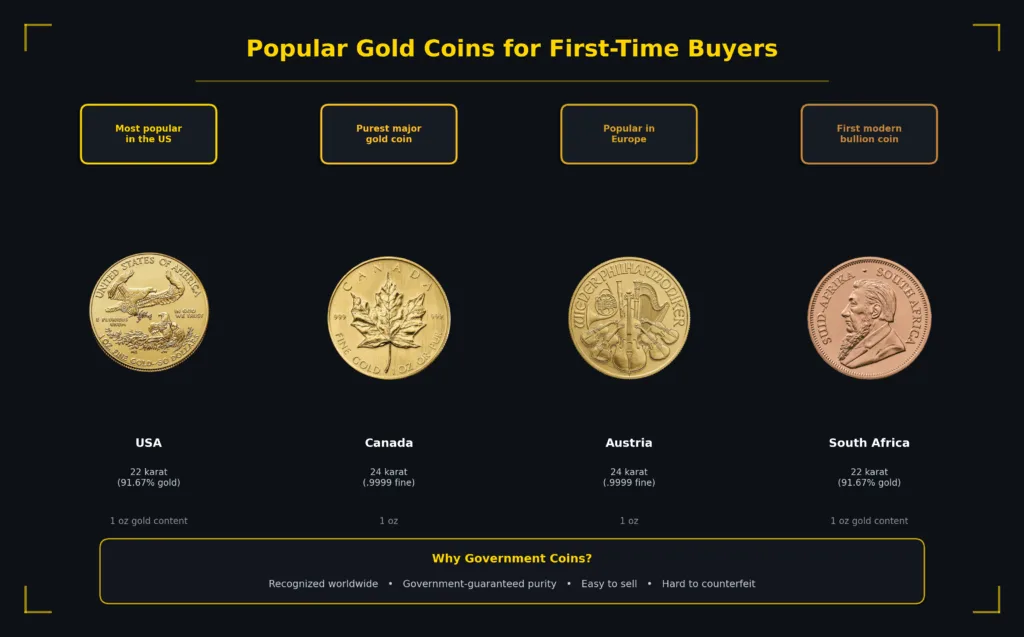
These are made by official mints like the U.S. Mint or Royal Canadian Mint. Popular choices include American Gold Eagles (22k gold), Canadian Gold Maple Leafs (24k, .9999 pure), and American Silver Eagles (.999 silver).
Featured Products
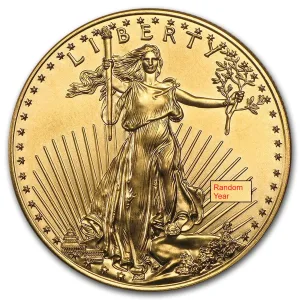
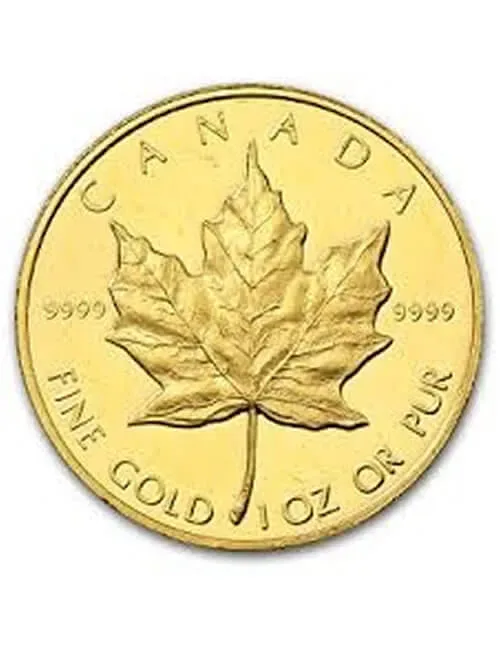
Why buy coins? They’re recognized everywhere, hard to fake, easy to sell, and backed by a government guarantee. The downside? You pay a bit more.
Bars
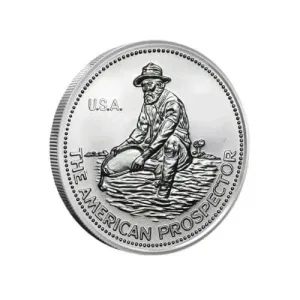
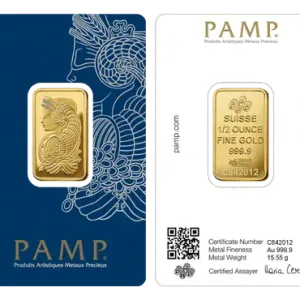
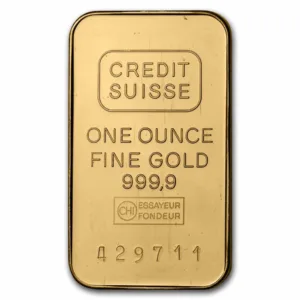
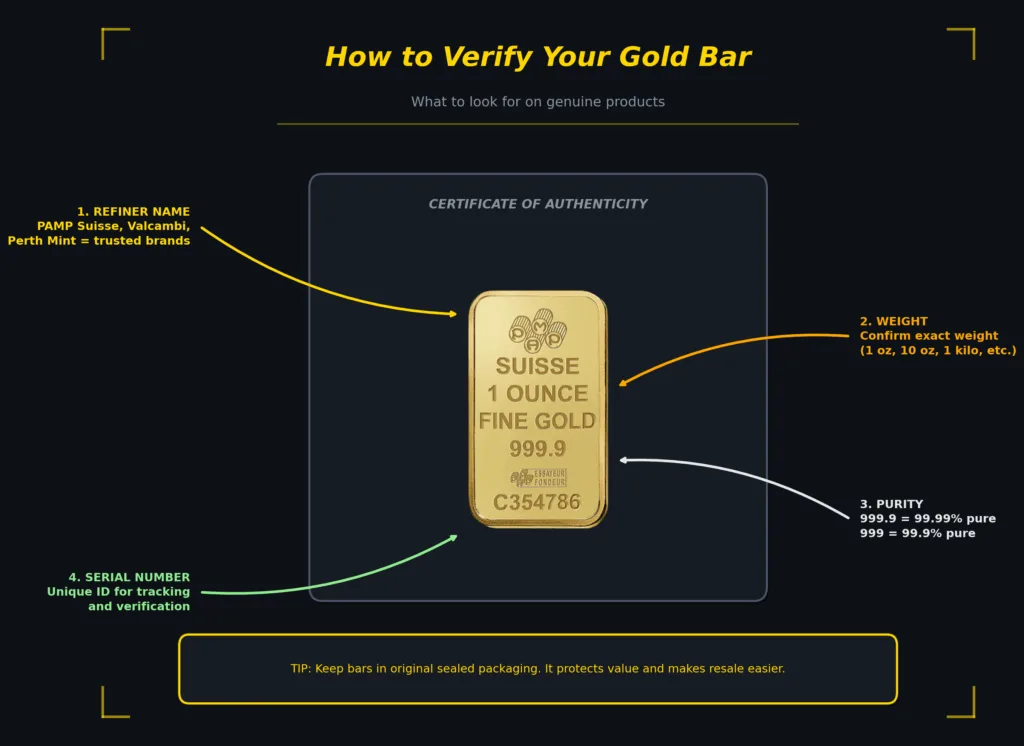
Bars from respected refiners like PAMP Suisse, Valcambi, or Perth Mint are also globally recognized. The advantages: lower premiums and more efficient if you’re buying larger amounts.
So which is better?
For most first-time buyers, coins are the way to go. They’re easier to sell, harder to counterfeit, and more recognizable. If you’re buying a lot and want to minimize costs, bars make sense.
Want to understand all those purity markings? Check out our guide on gold fineness explained.
Step 5: Gold or Silver? (Or Both?)
Gold and silver are both precious metals, but they behave differently.
Gold is more stable and less volatile. Central banks buy it (they don’t buy silver), and it’s easier to store a lot of value in a small space. The tradeoff is that it’s more expensive to get started.
Silver swings more dramatically in both directions. About 59% goes to industrial use according to Sprott research, which means demand from manufacturing affects the price. It’s cheaper to get started with silver, and it’s currently in its seventh straight year of supply deficit.
If you want to understand how gold and silver relate to each other, check out understanding the gold-silver ratio.
Our suggestion for beginners: Start with gold. It’s more stable and easier to hold without second-guessing yourself when prices move. Once you’re comfortable, add some silver. A common mix is 60-70% gold and 30-40% silver, but it’s really up to you.
Step 6: Figure Out Storage
You’ve got your gold or silver. Now where do you put it?
At Home
You can access it anytime, there are no fees, and you have total privacy. The downside is the risk of theft, it’s harder to insure, and you could lose it in a fire or flood. If you go this route, get a good safe (fire-rated, bolted down), don’t tell people about it, and consider spreading it around different spots.
Bank Safe Deposit Box
Very secure and usually cheap ($50-200/year). But you can only access it during bank hours, it’s not FDIC insured, and you might not be able to get to it during a banking crisis.
Private Vault
Professional security with insurance available, and your metal is segregated from others. The downsides are ongoing fees and the fact that you’re trusting someone else with your stuff.
For small amounts, home storage works fine. As your stack grows, consider spreading it across multiple locations.
Step 7: Know the Tax Rules
Nobody likes surprises at tax time. Here’s what you need to know:
Capital Gains
The IRS treats precious metals as “collectibles” (IRS Topic 409). If you sell at a profit after holding for more than a year, you pay up to 28%, which is higher than the 15-20% for stocks. If you sell within a year, it’s taxed as regular income. Keep your receipts because your cost basis includes the premium you paid.
Sales Tax
About 42 states don’t charge sales tax on precious metals, but rules vary. Some have minimum purchase amounts. Check your state’s laws before buying.
Want to hold gold in a tax-advantaged account? Our precious metals IRA guide explains how that works.
Step 8: Start Small
Here’s some advice that might surprise you: don’t go all-in on your first purchase.
Start with something manageable. Maybe one gold coin or 10-20 oz of silver. This lets you test the dealer before committing big money. You’ll learn how to handle and store precious metals without too much at stake, and you’ll build confidence through experience rather than just reading about it.
Once you’re comfortable, you can buy more over time. This approach, called dollar-cost averaging, means you buy regularly regardless of price. Some months you’ll get more for your money, some months less, but it averages out.
Quick Checklist Before You Buy
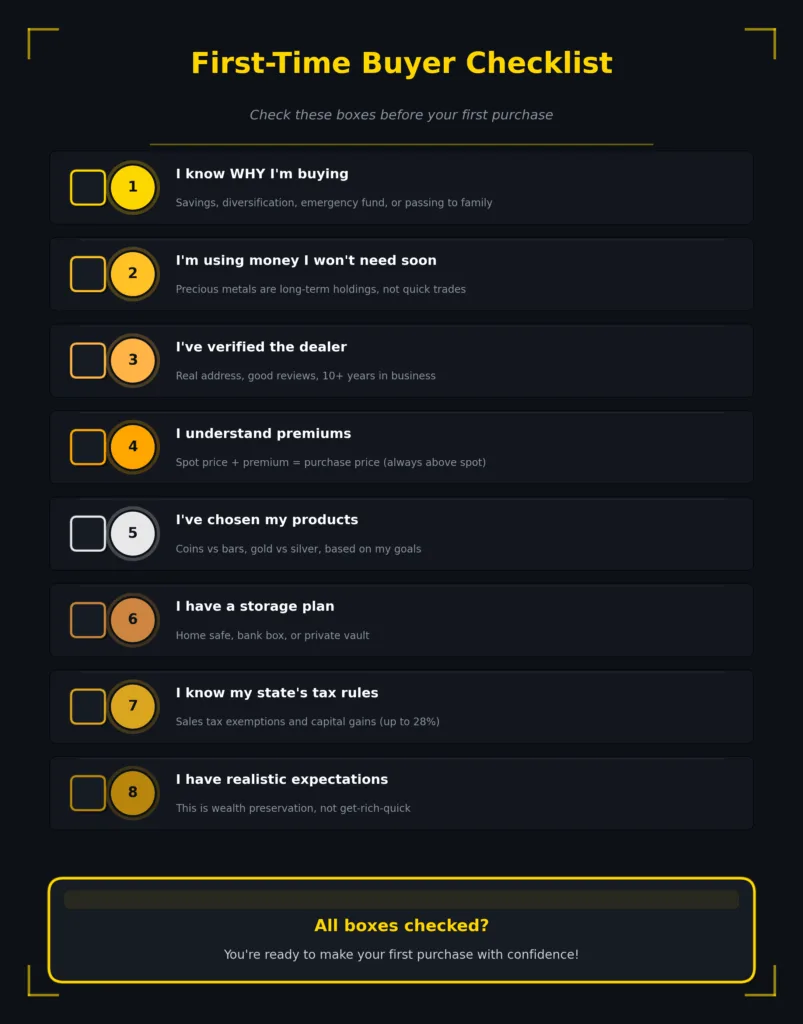
Before you make your first purchase, make sure you can check these boxes:
- I know why I’m buying (savings, diversification, emergency fund, etc.)
- I’m using money I won’t need anytime soon
- I’ve checked out the dealer (real address, good reviews, been around awhile)
- I understand what premiums are and why I’m paying them
- I’ve decided on coins vs. bars and gold vs. silver
- I have a plan for where to store my metals
- I understand the tax situation in my state
- I have realistic expectations (this is about preserving wealth, not getting rich quick)
Common Mistakes to Avoid
Mistake 1: Buying “Rare” Coins
Some dealers push collectible or numismatic coins with huge markups (50-200% over metal value). Unless you’re an expert, stick to regular bullion. You don’t need to pay $3,000 for a coin with $2,000 of gold in it. We explain more in why collectible coins cost more than metal weight.
Mistake 2: Ignoring Premiums
A $50 premium on a tiny 1/10 oz coin is about 12%. A $100 premium on a 1 oz coin is only about 2.3%. Always think in percentages, not dollars.
Mistake 3: Buying From Random Online Sellers
eBay, Craigslist, Facebook Marketplace… full of fakes. The money you save isn’t worth the risk. Stick with established dealers.
Mistake 4: Panic Buying When Prices Spike
When everyone’s scared, premiums go through the roof. Tight markets mean higher costs for buyers. Dollar-cost averaging keeps you from buying at the worst times.
Mistake 5: Not Keeping Records
From day one, save your receipts. Write down serial numbers. Take photos. You’ll need these for insurance, taxes and estate planning.
Ready to Get Started?
Buying gold and silver isn’t complicated. If you’re buying gold for beginners, you don’t need to be an expert. You just need to know the basics, find a dealer you trust and start small.
People have been preserving wealth with precious metals for thousands of years. And with $38 trillion in national debt, inflation that won’t quit and central banks buying over 1,000 tonnes of gold every year for three years running, there are plenty of reasons why people are getting interested now.
The best time to buy was years ago. The second-best time is now.
Whether you’re buying your first coin or building a serious position, Bullion Trading LLC is here to help. Browse our selection online or visit us at our NYC location in the Diamond District. We’re happy to answer questions and help you get started the right way.