


With gold prices reaching record highs above $4,200 per ounce in December 2025, according to World Gold Council data, many investors find themselves priced out of standard one-ounce coins and bars. A single American Gold Eagle now costs over $4,300 including premiums, a significant barrier for those building positions systematically or working within budget constraints.
Enter fractional gold coins: smaller denominations that offer the same government-backed purity and recognizability as their full-ounce counterparts, but at price points accessible to virtually any investor. Understanding which fractional size, 1/10 oz, 1/4 oz, or 1/2 oz, best suits your investment objectives requires examining premiums, liquidity, practical considerations, and how each size serves different portfolio strategies.
This guide provides the factual framework for making informed decisions about fractional gold purchases.
What Are Fractional Gold Coins?
Fractional gold coins are government-minted bullion coins weighing less than one troy ounce. The most common fractional sizes are:
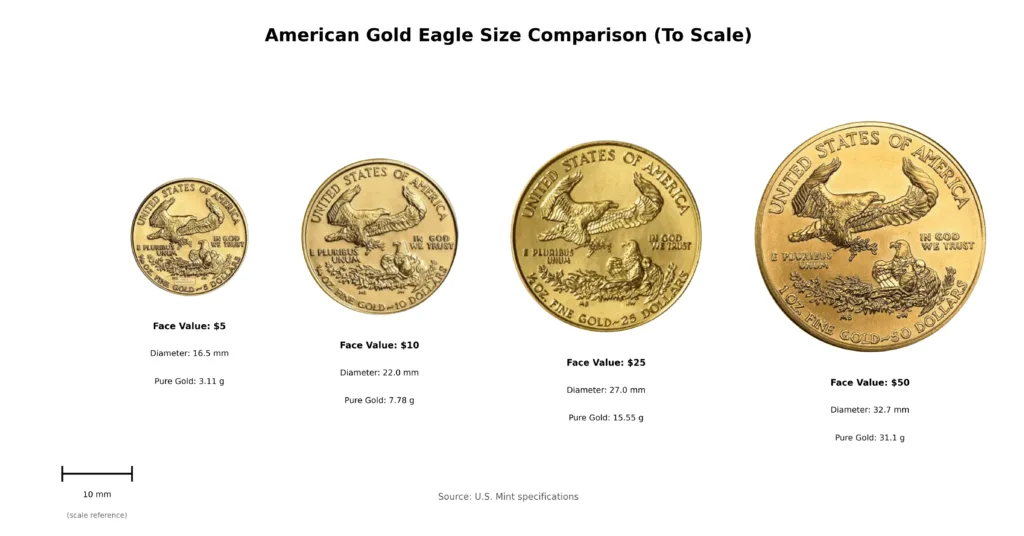
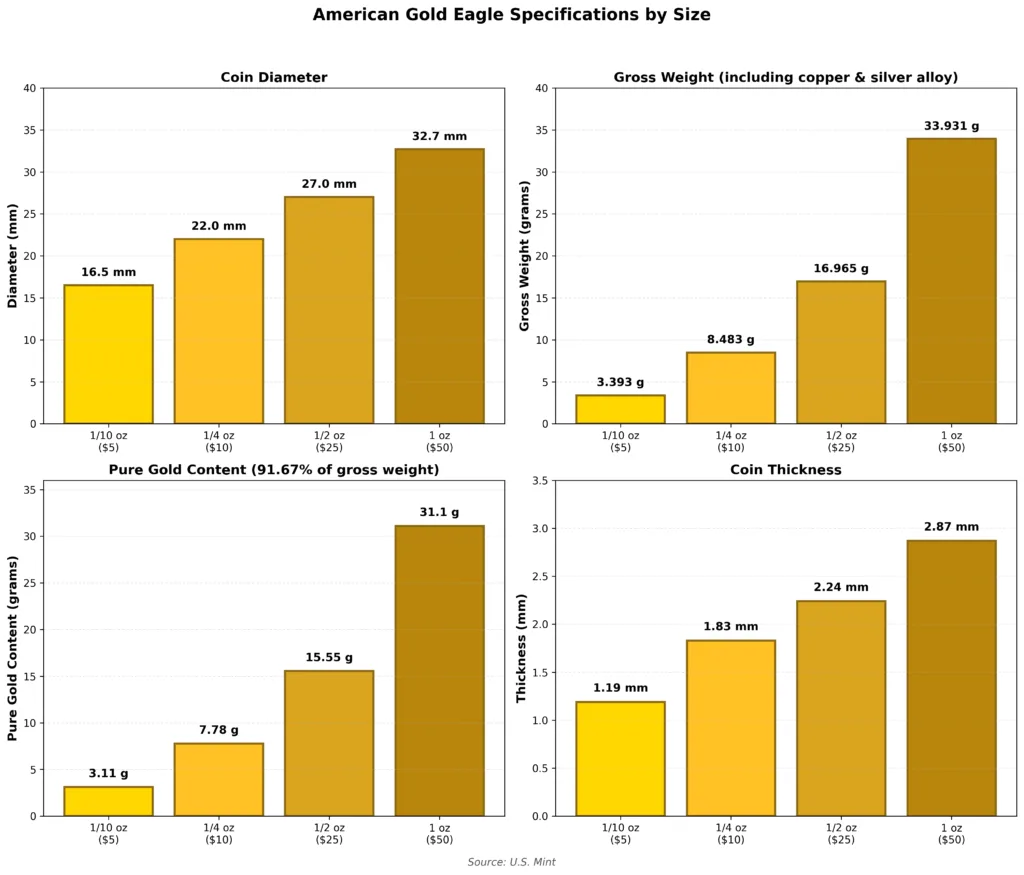
- 1/10 troy ounce (3.11 grams of pure gold)
- 1/4 troy ounce (7.78 grams of pure gold)
- 1/2 troy ounce (15.55 grams of pure gold)
These coins are produced by major government mints worldwide and carry the same legal tender status and purity guarantees as their full-ounce versions. According to U.S. Mint specifications, American Gold Eagles are offered in all four denominations with face values of $5, $10, $25, and $50 respectively, though their market value reflects gold content rather than face value.
Popular Fractional Gold Coin Programs
Major government mints producing fractional gold coins include:
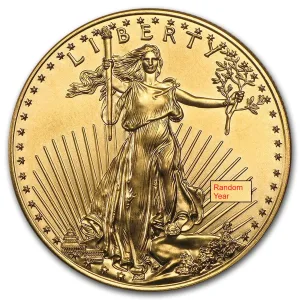
- American Gold Eagle (U.S. Mint): 22-karat gold (91.67% gold, with silver and copper for durability), available in 1/10, 1/4, 1/2, and 1 oz
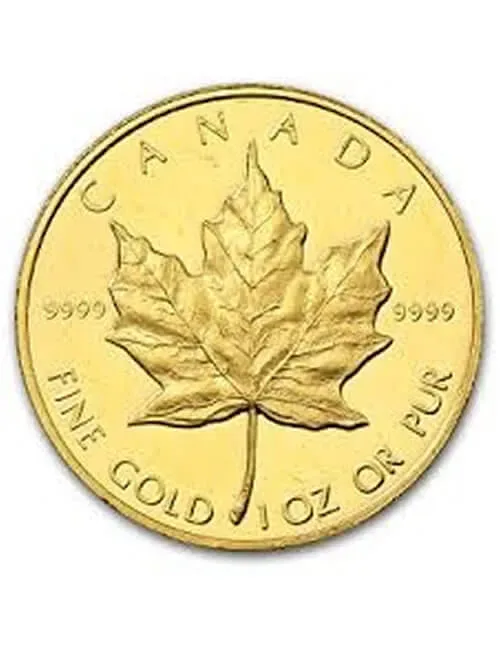
- Canadian Gold Maple Leaf (Royal Canadian Mint): 24-karat gold (99.99% pure), available in 1/10, 1/4, 1/2, and 1 oz
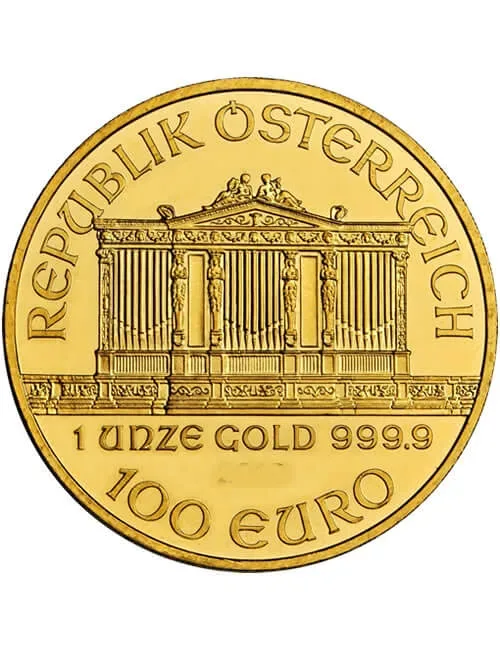
- Austrian Gold Philharmonic (Austrian Mint): 24-karat gold (99.99% pure), available in 1/10, 1/4, 1/2, and 1 oz
- Australian Gold Kangaroo (Perth Mint): 24-karat gold (99.99% pure), available in 1/10, 1/4, 1/2, and 1 oz
- South African Krugerrand (South African Mint): 22-karat gold (91.67% pure), available in 1/10, 1/4, 1/2, and 1 oz
Each program offers identical purity guarantees across all sizes, ensuring fractional coins contain proportionally the same gold content as their full-ounce counterparts.
Silver Coin Collection


The Premium Reality: Why Smaller Costs More Per Ounce
The fundamental economics of fractional gold coins work against cost efficiency. Minting a 1/10 oz coin requires nearly the same die work, quality control, packaging, and handling as a 1 oz coin, but the gold content, and thus the base value, is one-tenth. These fixed production costs get distributed across less gold, resulting in higher premiums per ounce of gold content.
Current Premium Structure (December 2025)
Premium percentages over spot price typically follow this pattern:
| Coin Size | Typical Premium Range | Approximate Cost at $4,200 Spot |
| 1 oz American Gold Eagle | 3-5% | $4,326 – $4,410 |
| 1/2 oz American Gold Eagle | 5-8% | $2,205 – $2,268 |
| 1/4 oz American Gold Eagle | 7-12% | $1,124 – $1,176 |
| 1/10 oz American Gold Eagle | 10-18% | $462 – $495 |
These premiums reflect dealer acquisition costs, minting expenses, and market demand. During periods of high retail demand, such as the current environment with gold near record highs, premiums can expand significantly, particularly for smaller denominations where supply constraints become more acute.
As detailed in our examination of gold and silver lease rates in 2025, tight supply conditions have elevated premiums across all product types, with fractional coins experiencing proportionally larger increases due to production capacity constraints at government mints.
The Math: Cost Per Ounce Comparison
Consider an investor with $4,400 to allocate to gold:
- Option A: Buy 1 oz American Gold Eagle at $4,350 premium-included = $4,350 total, acquiring 1.000 oz of gold
- Option B: Buy 2 × 1/2 oz American Gold Eagles at $2,230 each = $4,460 total, acquiring 1.000 oz of gold
- Option C: Buy 4 × 1/4 oz American Gold Eagles at $1,150 each = $4,600 total, acquiring 1.000 oz of gold
- Option D: Buy 10 × 1/10 oz American Gold Eagles at $475 each = $4,750 total, acquiring 1.000 oz of gold
The premium differential becomes substantial at scale. An investor accumulating 10 ounces of gold would pay approximately $3,500-$4,000 more in premiums buying exclusively 1/10 oz coins versus 1 oz coins.
Size-by-Size Analysis: Finding Your Fit
1/10 oz Gold Coins: Maximum Accessibility, Maximum Premium
1/10 oz Gold American Eagle Coin(Random Year)
Best For: Entry-level investors, gift-giving, emergency liquidity, dollar-cost averaging on tight budgets
The 1/10 oz gold coin represents the most accessible entry point to government-minted gold ownership. At approximately $450-$500 per coin in December 2025, these coins enable systematic accumulation even on modest budgets. According to U.S. Mint specifications, the 1/10 oz American Gold Eagle measures 16.5mm in diameter (smaller than a U.S. dime’s 17.9mm) with a thickness of 1.19mm.
Advantages:
- Lowest absolute dollar commitment per purchase
- Ideal for dollar-cost averaging with limited monthly investment capital
- Maximum divisibility for potential future transactions or partial liquidation
- Popular gift items for graduations, birthdays, and holidays
- Easier to liquidate small amounts without selling entire position
Disadvantages:
- Highest premiums (10-18% over spot)
- Small physical size increases handling difficulty and loss risk
- Lower resale efficiency due to bid-ask spread percentages
- Accumulating meaningful positions requires many individual purchases
For investors focused on the specific portfolio job gold performs, such as emergency liquidity or gradual wealth accumulation, 1/10 oz coins offer unmatched flexibility despite premium inefficiency.
1/4 oz Gold Coins: The Balanced Middle Ground
1/4 oz Gold American Eagle Coin(Random Year)
Best For: Regular accumulators, IRA contributions, balancing cost efficiency with flexibility
The 1/4 oz gold coin occupies interesting middle ground, offering meaningfully lower premiums than 1/10 oz coins while maintaining price points ($1,100-$1,200) accessible to most investors. The American Gold Eagle 1/4 oz measures 22mm in diameter with 1.83mm thickness, roughly the size of a U.S. nickel.
Advantages:
- Significantly lower premiums than 1/10 oz (7-12% vs 10-18%)
- Practical price point for monthly accumulation strategies
- IRA-eligible for precious metals retirement accounts
- More substantial physical presence than 1/10 oz
- Good balance between divisibility and cost efficiency
Disadvantages:
- Still carries meaningful premium versus 1 oz coins
- Less common in retail circulation than 1/10 oz or 1 oz
- May have slightly wider bid-ask spreads at some dealers
The 1/4 oz denomination often represents the sweet spot for investors who want fractional flexibility without accepting the highest premium tier. Its practical usefulness, substantial enough to feel meaningful, small enough to remain affordable, explains its enduring popularity.
1/2 oz Gold Coins: Premium Efficiency Meets Practical Divisibility
1/2 oz American Eagle Gold Coin
Best For: Serious accumulators, those prioritizing cost efficiency while maintaining some divisibility
The 1/2 oz gold coin offers the best premium efficiency among fractional sizes, typically trading at 5-8% over spot, only marginally higher than full-ounce coins. At $2,200-$2,300 per coin, these represent meaningful investments while still falling below the $4,300+ threshold for 1 oz coins. The American Gold Eagle 1/2 oz measures 27mm diameter with 2.24mm thickness, comparable to a U.S. half dollar.
Advantages:
- Lowest fractional premiums (5-8% over spot)
- Substantial gold content meaningful for portfolio allocation
- More efficient resale than smaller fractionals
- Practical divisibility, selling half your position doesn’t require selling everything
- Lower price point than 1 oz while maintaining cost efficiency
Disadvantages:
- Still approximately $200-300 premium penalty versus equivalent 1 oz gold
- Higher absolute cost may strain smaller budgets
- Less divisibility than smaller denominations
For investors who previously bought 1 oz coins but find current prices ($4,300+) challenging, the 1/2 oz size enables continued accumulation at roughly half the absolute cost while maintaining reasonable premium efficiency.
Strategic Applications for Fractional Gold
Dollar-Cost Averaging Strategy
Fractional gold enables systematic accumulation regardless of price levels. An investor committing $500 monthly can purchase:
- 1 × 1/10 oz coin consistently regardless of spot price fluctuations
- 1 × 1/4 oz coin every 2-3 months
- 1 × 1/2 oz coin every 4-5 months
This dollar-cost averaging approach, examined in our analysis of gold bull market corrections, removes timing anxiety while building positions across price levels. The premium penalty on smaller coins represents the cost of this flexibility.
Emergency Liquidity Planning
Fractional gold provides practical emergency liquidity that full-ounce coins cannot match. In scenarios requiring immediate cash, selling a 1/10 oz coin ($450-$500) rather than a full ounce ($4,300+) preserves more of your position while meeting immediate needs.
As detailed in our examination of gold’s role during debt crises, physical gold’s zero counterparty risk becomes most valuable during precisely the periods when liquidating small amounts may be necessary.
Gift-Giving and Wealth Transfer
Fractional gold coins, particularly 1/10 oz denominations, serve as meaningful gifts that introduce recipients to precious metals ownership. Government-minted coins in presentation packaging from the Bullion Trading LLC inventory offer tangible wealth that appreciates over time, unlike most consumer gifts.
For wealth transfer purposes, fractional coins enable distribution across multiple recipients without requiring liquidation and reconversion to cash.
IRA Diversification
Fractional gold coins from major government mints qualify for inclusion in precious metals IRAs. For investors making annual IRA contributions, fractional sizes enable gold allocation without requiring the full $4,300+ commitment of a 1 oz coin within contribution limits.
Liquidity Considerations: Which Size Sells Easiest?
Liquidity, the ability to convert gold back to cash quickly at fair prices, varies by coin size and market conditions.
1 oz Coins: Maximum Liquidity
Full-ounce coins represent the most liquid fractional option, with the tightest bid-ask spreads and deepest buyer pools. Dealers maintain larger inventories and more competitive pricing for 1 oz coins.
1/2 oz Coins: Strong Liquidity
Half-ounce coins maintain strong liquidity with most dealers actively buying at competitive spreads. The combination of meaningful gold content and practical price points ensures ready markets.
1/4 oz Coins: Good Liquidity
Quarter-ounce coins trade actively, though spreads may widen slightly compared to larger denominations. Most dealers readily purchase 1/4 oz coins at reasonable premiums to spot.
1/10 oz Coins: Variable Liquidity
Tenth-ounce coins experience the widest bid-ask spreads among fractional sizes. The combination of high acquisition premiums and modest gold content creates challenging resale economics. Investors should expect to recover less of their premium when selling 1/10 oz coins compared to larger sizes.
For context on how market conditions affect precious metals liquidity, our analysis of silver supply tightness in 2025 demonstrates how tight markets can affect both acquisition and resale dynamics.
Comparing Fractional Gold to Alternatives
Fractional Gold vs. Gold Bars
Small gold bars (1 gram, 5 gram, 10 gram) offer lower premiums than comparable-weight coins but sacrifice the recognizability and liquidity advantages of government-minted coins. Coins generally offer superior resale characteristics for retail investors, though bars may suit larger positions.
Fractional Gold vs. Silver
Investors finding gold prices prohibitive might consider silver as an alternative entry point to precious metals. At approximately $58 per ounce (December 2025), silver offers substantially lower absolute price points. However, as detailed in our analysis of the gold-silver ratio, the metals serve somewhat different portfolio functions.
Fractional Gold vs. Full-Ounce Accumulation
Investors with sufficient capital should generally prefer full-ounce coins for premium efficiency. However, the perfect shouldn’t become the enemy of the good, accumulating fractional gold beats accumulating nothing while waiting to afford full ounces.
Which Fractional Size Should You Choose?
Choose 1/10 oz If:
- Your monthly investment budget is under $500
- You prioritize maximum divisibility for potential future needs
- You’re building a gift collection or introducing others to gold ownership
- You want to start accumulating immediately rather than saving for larger purchases
Choose 1/4 oz If:
- Your monthly investment budget is $500-$1,200
- You want meaningful premium savings versus 1/10 oz without sacrificing all divisibility
- You’re making IRA contributions with allocation constraints
- You prefer a balance between cost efficiency and flexibility
Choose 1/2 oz If:
- Your investment budget allows $2,000+ purchases
- Premium efficiency is a priority but 1 oz prices ($4,300+) feel uncomfortable
- You’re transitioning from 1 oz purchases as prices increased
- You want the lowest fractional premiums while maintaining some size flexibility
Consider Mixing Sizes If:
- You want both cost efficiency (larger coins) and emergency liquidity (smaller coins)
- Your budget varies month to month
- You’re building a diversified portfolio for multiple potential uses
Practical Buying Tips for Fractional Gold
Compare Premium Percentages, Not Just Dollar Amounts
A $50 premium on a 1/10 oz coin (approximately 12% premium) represents worse value than a $100 premium on a 1/2 oz coin (approximately 5% premium). Always calculate premium percentage relative to gold content value.
Consider Tubes and Multi-Coin Purchases
Many dealers offer reduced premiums on fractional coins purchased in tubes (typically 10-20 coins) or multi-coin lots. If planning substantial fractional accumulation, inquire about volume pricing.
Verify Government Mint Authenticity
Stick to recognized government mint products (American Gold Eagles, Canadian Maple Leafs, etc.) for maximum liquidity and authenticity assurance. As detailed in our guide to spotting fake gold and silver, government-minted coins offer superior authentication characteristics compared to private mint products.
Understand Storage Implications
Fractional coins require proportionally more storage per ounce of gold than larger coins or bars. Ten 1/10 oz coins occupy more space than one 1 oz coin containing the same gold. Factor storage considerations into size selection, particularly for larger positions.
Conclusion: Fractional Gold as Strategic Tool
Fractional gold coins aren’t simply “small gold”, they’re strategic tools serving specific portfolio functions that full-ounce coins cannot match. The premium penalty represents the cost of flexibility, accessibility, and divisibility that many investors genuinely need.
In the current environment with gold above $4,200 per ounce, fractional coins enable continued systematic accumulation for investors who would otherwise be priced out of the market. As detailed in our analysis of Q3 2025 gold demand trends, physical bar and coin demand reached 316 tonnes despite record prices, evidence that investors continue finding ways to accumulate gold regardless of price levels.
The optimal fractional size depends entirely on individual circumstances: budget, investment timeline, liquidity needs, and portfolio objectives. There’s no universally “best” size, only the size that best serves your specific situation.
For investors choosing between waiting to afford full-ounce coins and buying fractional gold now, the historical record suggests that time in the market matters more than perfect execution. As examined throughout our coverage of gold’s structural bull market, the fundamental drivers supporting gold prices, central bank accumulation, fiscal deficits, monetary policy constraints, operate over years and decades, not weeks and months.
Whether you’re purchasing your first 1/10 oz coin or adding 1/2 oz coins to an established position, Bullion Trading LLC offers comprehensive fractional gold options from major government mints worldwide. From American Gold Eagles to Canadian Maple Leafs and Austrian Philharmonics, our extensive inventory serves every fractional gold strategy. In a market where gold’s accessibility matters as much as its investment merit, fractional coins ensure everyone can participate in precious metals ownership at their own pace and budget level.
